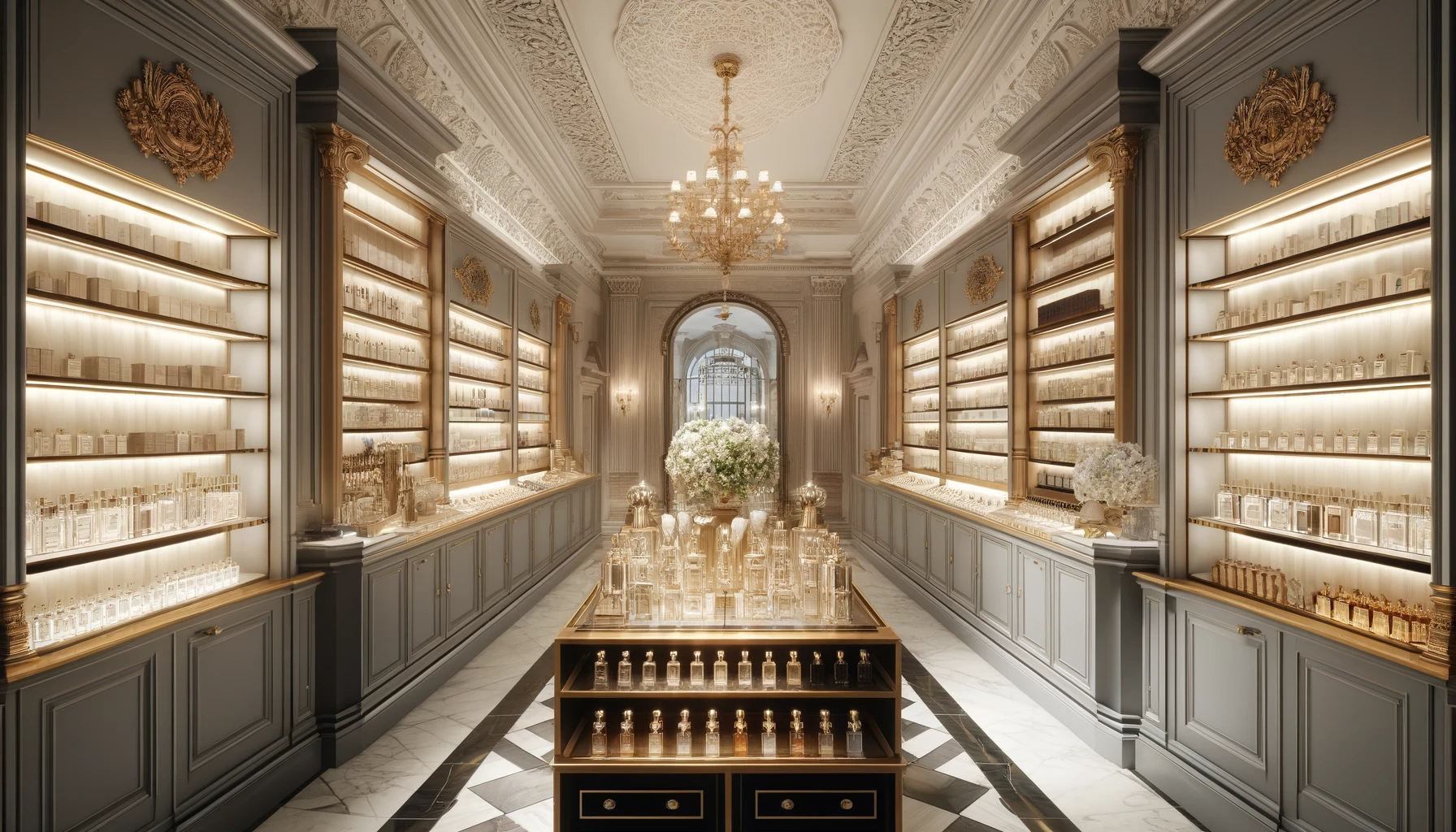
The woman ahead of you at the counter doesn’t glance at the display. She doesn’t ask what’s popular or pick up the bottle with the prettiest packaging. She exchanges a few quiet words with the vendeur, requests something with vetiver and smoke, and leaves in under ten minutes with a single bottle wrapped in tissue. No browsing. No deliberation. The transaction has the efficiency of someone ordering at a café they’ve been going to for years.
This is how Parisians shop for perfume — and it is almost nothing like the way most visitors do it. In a city that generates €3.23 billion in annual fragrance revenue and accounts for over a third of Europe’s luxury niche segment, the abundance is overwhelming. The art is in knowing where to look, and more importantly, how to ask.
Paris Is the World’s Perfume Capital — Here’s What That Actually Means
France didn’t become the global epicentre of fragrance by accident. The story begins in 12th-century Grasse, where tanners first used scented oils to mask the stench of cured leather. By 1533, when Catherine de’ Medici arrived at the French court with her personal perfumer, René le Florentin, the aristocracy was hooked. Louis XV’s court would eventually earn the nickname la cour parfumée — the perfumed court — and by the 18th century, perfumery had become a formalised guild industry, feeding a domestic and international appetite that has never diminished.
Today, that inheritance is commercially enormous. France’s perfume market is forecast to grow at a compound annual rate of 4.7% between 2025 and 2030, reaching $5.8 billion by decade’s end. Premium products already account for over 76% of domestic revenue. And in the niche segment — the artisanal, limited-edition, house-specific fragrances that have exploded in popularity since the early 2000s — France holds 37% of Europe’s luxury niche market, double the UK’s share.
What this means practically, for the traveller standing on the Rue Saint-Honoré with three hours and a moderate budget: the city’s fragrance landscape divides cleanly into two territories. There are the flagships — Chanel, Dior, Guerlain, Hermès — and then there is everything else: the independent parfumeries, the concept boutiques, the niche multi-brand houses that most visitors never find. Parisians tend to shop the latter.
Where Parisians Actually Go — and Why It’s Not the Duty-Free Counter
The most important rule for shopping for perfume in Paris like a Parisian is geographic: avoid the department store counters in peak hours and the tourist-facing duty-free halls at Charles de Gaulle entirely. Both exist for volume, not discovery.
The Rue Saint-Honoré in the 1st arrondissement is where the serious shopping begins. Here, L’Artisan Parfumeur — a pioneer of French niche perfumery since 1976 — sits alongside BDK Parfums, a newer Parisian maison that creates contemporary fragrances rooted in Parisian social geography: a hotel room, a rain-soaked boulevard, a specific table at a brasserie. Byredo, technically Swedish, has become a Parisian fixture for its austere bottles and quietly addictive compositions like Gypsy Water.
A short detour to Rue Bachaumont in the 2nd arrondissement brings you to Nose Paris — arguably the most useful stop for a visitor who doesn’t already know what they want. Nose operates as part boutique, part diagnostic studio. Its staff conduct a structured olfactory interview — your mood, your associations, your existing wardrobe of scents — and match you against a rotating selection of over 500 niche fragrances. It’s methodical in a way that walk-in browsing at a flagship simply isn’t.
Over in the 5th arrondissement’s Quartier Latin, Parfumerie Burdin offers something different again: the traditional French parfumerie, family-run, approaching 90 years of history, with the kind of cross-brand knowledge and unhurried service that branded boutiques structurally can’t provide. Staff here will ask which notes you respond to, then walk you through the house’s full logic — not just what’s selling.
For the niche-curious, Jovoy near the Place Vendôme carries an extensive multi-brand portfolio and its own in-house line. Go on a weekday morning; the space, which can feel overwhelmed in peak tourist season, rewards the early arrival.
What a Parisian Nose Knows — The Olfactory Education Most Tourists Skip
How should you test perfume in Paris to avoid buyer’s regret?
The cardinal rule: never buy on the first sniff. Spray on skin — the inside of the wrist, the crook of the elbow — and walk away for at least 20 minutes. Top notes, which evaporate quickly, bear almost no resemblance to a fragrance’s heart and base. The perfume you smell at 30 seconds and the one you wear at four hours are often entirely different propositions.
Parisians tend to operate with a mental vocabulary that most visitors haven’t developed — distinguishing between an eau de toilette (8–12% concentration), an eau de parfum (15–20%), and a parfum or extrait (above 20%). These aren’t just marketing gradations. They govern how a scent opens, how it transitions, and how long it lingers on skin. French buyers increasingly favour extrait concentrations, and 59% of Paris-based consumers now opt for refillable bottles rather than single-use flacons — a preference for quality and reduction in equal measure.
The second habit worth borrowing: limit yourself to three or four fragrances per session. Olfactory fatigue is real. Sniffing ten bottles in sequence produces only diminishing returns; by the sixth, your nose is providing unreliable data. Use coffee beans or a clean fabric to reset between scents, but treat the exercise as a serious edit rather than a sweep.
Grasse, the UNESCO-recognised perfume capital located two hours south by train, is also worth the day trip for those with a genuine interest in fragrance’s raw materials. The town’s workshops — Galimard, Molinard, Fragonard — offer ingredient libraries and short workshops. Molinard’s Paris boutique on the Rue Saint-Honoré serves as a useful primer, particularly for its heritage classics like Habanita.
The Osmothèque in Versailles, though not a shop, deserves a mention here. It is the world’s largest perfume archive — housing over 3,000 preserved scents, including discontinued masterpieces like Coty’s original Chypre from 1917 — visited by appointment. For anyone serious about fragrance, it is the olfactory equivalent of a museum education; it reframes everything you thought you knew about what perfume can be.
The VAT Refund Calculation Most Visitors Get Wrong
The financial logic of buying perfume in Paris is better than many tourists realise — and worse than airport duty-free counters would have you believe.
France applies a standard 20% VAT to consumer goods, including perfume. Non-EU residents who spend a minimum of €100 at a single store in a single day are entitled to claim a détaxe refund — a reimbursement of between 10% and 15% of the total purchase price, after processing fees are deducted. The refund is handled at PABLO kiosks in the airport’s customs area before departure.
The maths are consequential. A €150 bottle of perfume purchased in-city costs approximately €132 after the refund — meaningfully less than the €125–€140 range typically offered at Duty Free counters at Charles de Gaulle, where the savings on niche and artisanal fragrances are rarely significant. For classic designer scents, the airport is occasionally competitive. For anything niche or limited-edition, the city wins.
The process is straightforward but demands foresight: ask for the détaxe form at the counter, present your passport, have the form stamped at the PABLO kiosk before clearing security. Lost forms mean lost refunds. That said, a growing number of boutiques now process this digitally, making the recovery at the airport a matter of minutes rather than a queue.
What you won’t hear from the sales counter is that some boutiques impose a higher minimum spend — occasionally €300 — before they’ll process the paperwork. It’s worth asking upfront: Proposez-vous la détaxe?
The Counterargument — or, Why the Flagships Still Have a Case
The case against shopping exclusively in niche ateliers isn’t difficult to construct.
First, the grande maison flagships — Chanel’s boutique on the Rue Cambon, Dior’s on the Avenue Montaigne, Guerlain’s historic counter on the Champs-Élysées — offer an experience that the smaller houses structurally cannot. Guerlain’s Champs-Élysées flagship, first opened in 1914, stocks the full private collection including the house’s Les Exclusifs range, which doesn’t circulate in general retail. The service, at these counters, can be extraordinary — the kind of unhurried, encyclopaedic guidance that reflects decades of institutional knowledge. These aren’t just shops; they’re archives with doors.
Second, the niche market carries its own form of hype inflation. Several of the most-photographed boutiques in Le Marais are selling scarcity as much as scent — limited editions and short runs that reward the Fragrantica obsessive but baffle the general visitor. The niche segment is growing at 13% annually in France, but growth attracts opportunism. Not every artisanal label behind a beautiful counter is worth the premium over a well-chosen Chanel.
The pragmatic Parisian navigates this without ideology. She buys Coco Mademoiselle at a flagship for the familiar and a small bottle from Nose Paris for the discovery. The two purchases serve different purposes: one is comfort, the other is curiosity.
The Real Parisian Method
Strip away the mystique, and shopping for perfume in Paris like a Parisian comes down to a few practical commitments: go where the locals go, not where the tourist maps point; test on skin, not paper; take time, not volume; and always ask about the détaxe.
The deeper principle — the one the woman at the counter already knew — is that perfume, in this city, is not a product category. It’s a decision about how you want to be perceived in the world. Parisians treat fragrance as they treat clothes: something to be chosen deliberately, worn consistently, and revised only when the mood genuinely shifts.
The bottle you leave Paris with should carry that same intentionality. That’s what makes it Parisian.