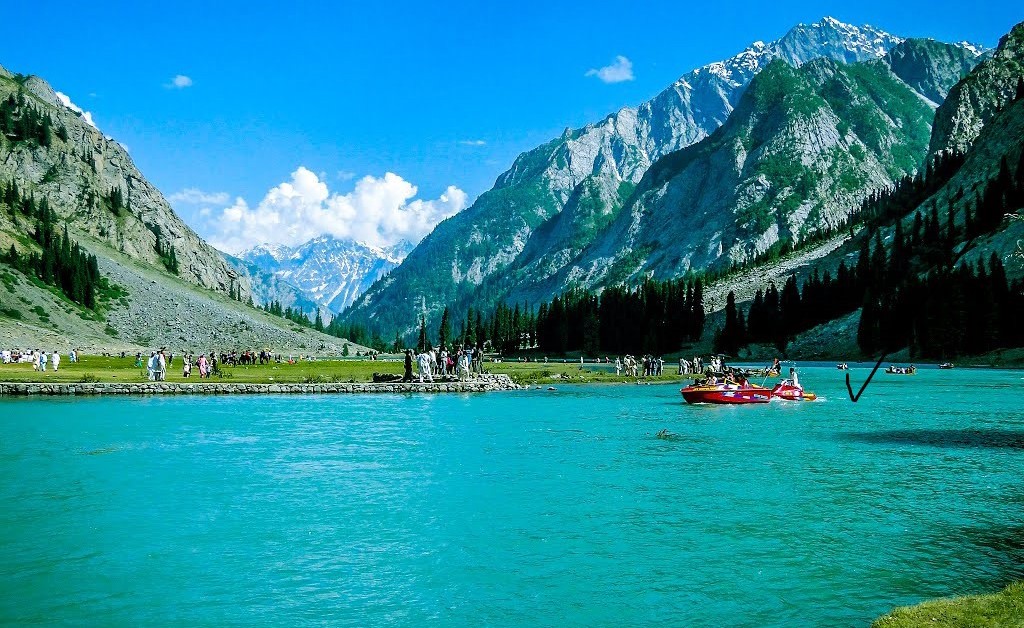
The Summer of the Grand Arrival — and Why Preparation Has Never Mattered More
There is a particular kind of traveler who has been watching Pakistan’s Northern Areas for years from a polite, cautious distance — reading the dispatches from Hunza, bookmarking the glacier footage from Skardu, quietly adding “Karakoram Highway” to a running list of once-in-a-lifetime itineraries. In 2026, that traveler is finally coming. In significant numbers.
This is not hyperbole. After a turbulent 2025 monsoon season that battered infrastructure across Gilgit-Baltistan and a geopolitically complicated spring that saw some European expedition operators postpone to this year, tourism in the Northern Areas is experiencing what the industry calls a compression effect: deferred demand, pent-up appetite, and a global media moment converging at once. Dawn.com reported that climbing and trekking permit applications from foreign adventure tourists in 2026 have already surpassed last year’s figures by March — a meaningful signal given that the season proper doesn’t start until June. Meanwhile, Pakistan’s e-visa is now available to citizens of 192 countries, and the NOC requirement that once tangled foreign visitors in bureaucratic limbo has largely been abolished for open-zone travel.
The result? Hunza, Skardu, Fairy Meadows, and the K2 Base Camp corridor are about to get busier than most veterans of the route have ever seen them.
And here is what the glossy travel content will not tell you: a boom is exactly when the unprepared suffer most. Hotel rooms at Serena Hunza book out in February. The NDMA has publicly warned that the 2026 monsoon may be up to 26% more intense than last year’s, which was itself deadly. The Pakistan Meteorological Department recorded temperatures 3–5°C above normal in Gilgit-Baltistan as early as February 2026 — a warming that is accelerating glacial melt and raising the risk of glacial lake outburst floods (GLOFs) in precisely the valleys tourists love most.
None of this should frighten you away. These mountains are worth every logistical complexity they demand. But they respect preparation and punish its absence. The following ten actions — assembled from the latest 2026 government data, meteorological forecasts, and intelligence from the region’s most experienced operators — are what separates a transformative journey from a cautionary tale.
Top 10 Things to Do Before Going to the Northern Areas in Summer 2026
1. Monitor PMD and NDMA Forecasts — Obsessively, Not Casually
The single most important pre-trip action in 2026 is one that almost no travel blog will tell you to do: follow the Pakistan Meteorological Department and the National Disaster Management Authority as if your trip depends on it — because it does.
This is not routine weather-checking. Pakistan’s NDMA issued a stark public warning in late 2025 that the 2026 monsoon season is expected to be significantly more intense, with glacial lake outburst flood risks elevated across Gilgit, Hunza, Ghizar, Astore, Bunji, and Chilas. PMD’s own spring 2026 data shows temperatures running 3–5°C above historical norms across Gilgit-Baltistan, accelerating snowmelt at an alarming rate. A dedicated climate seminar convened in early 2026 to specifically analyze GLOF risk in the region concluded that the combination of rising temperatures, reduced winter precipitation, and thin glacier ice is creating a multidimensional hazard for summer travelers.
In practical terms, this means a road you drove on Tuesday may be a debris field by Thursday. It has happened repeatedly in recent summers.
Action step: Bookmark pmd.gov.pk and ndma.gov.pk. Set up Google Alerts for “Gilgit-Baltistan flood” and “KKH road closure.” Create a WhatsApp group with your local guide who will have ground-truth information the websites won’t. This is not paranoia — it is the baseline due diligence any competent traveler in this terrain owes themselves.
2. Secure Bookings and Permits Months in Advance — or Accept the Consequences
The accommodation supply in the Northern Areas has not kept pace with the tourism surge, and in 2026, the gap between supply and demand is structural. The handful of quality properties — PTDC Motel Skardu, Serena Hotel Hunza, Eagle’s Nest Duikar — fill months ahead. Tour operators with experienced guides and reliable four-wheel-drive vehicles are similarly constrained. Waiting until April to plan a June departure is no longer a mild inconvenience; it is a plan to stay somewhere deeply inferior or not go at all.
On the permits side, the situation requires careful reading. The Directorate of Tourist Services Gilgit-Baltistan has clarified that foreign tourists visiting open-zone areas do not require separate trekking permits, but those intending to trek or climb in restricted zones — areas near international borders, military-sensitive corridors, or peaks above 6,500 metres — must obtain permits prior to arrival. The processing time for trekking permits is typically 3–5 working days; mountaineering permits take 2–4 weeks; clearances for restricted zones can take 4–6 weeks.
In 2026, with permit applications from foreign adventure tourists already running ahead of 2025 figures, that queue is only getting longer.
Action step: Contact a licensed tour operator registered with the GB Department of Tourist Services by January or February for summer travel. Verify their registration. Confirm in writing what permits they will handle on your behalf, and what your cancellation rights are if roads are blocked by weather events — a scenario that, given 2026 forecasts, is more than theoretical.
3. Get Comprehensive Travel Insurance and Medical Preparation — Not the Cheap Version
Let us be direct: the Northern Areas of Pakistan is not a destination where budget travel insurance is adequate. It is a region where you may require helicopter evacuation from a glaciated valley at 4,000 metres, emergency hospitalisation in Gilgit or Skardu (both of which have functional but limited facilities), or medical repatriation to Islamabad or beyond. The cost of helicopter rescue in this terrain — when it is available at all — runs into thousands of dollars. A policy that caps emergency evacuation at a modest figure or excludes “high-altitude trekking” as an adventure activity is not a policy; it is a false comfort.
G Adventures, which operates structured tours in the region, recommends a specific vaccination regimen for Pakistan travel: hepatitis A and B, typhoid, diphtheria, tetanus, polio, and rabies for those heading into rural areas away from medical care. For altitude-related illness — a real risk at Khunjerab Pass (4,693m), Concordia, or even parts of the K2 Base Camp approach — consult a travel medicine physician about acetazolamide (Diamox) at least six weeks before departure.
Altitude sickness is not a minor inconvenience. Acute mountain sickness can progress to high-altitude pulmonary or cerebral oedema, both of which are medical emergencies at elevations where evacuation is difficult. The prevention protocol is simple: ascend gradually, hydrate aggressively, avoid alcohol for the first 48 hours at altitude, and know the symptoms well enough to act on them before they escalate.
Action step: Purchase a comprehensive adventure travel policy with at minimum: unlimited emergency medical, helicopter evacuation, trip interruption for natural disasters (specifically including floods and landslides), and high-altitude trekking coverage. World Nomads, Battleface, and IMG Global are among providers with appropriate regional track records. Book a travel medicine appointment 6–8 weeks before departure.
4. Master the Cash, Cards, and Digital Payment Reality of GB
Here is a truth that every seasoned traveler to the Northern Areas knows and almost no travel article states plainly: Gilgit-Baltistan is functionally a cash economy, and the ATM network is fragile, unreliable, and absent entirely beyond the main towns.
Gilgit and Skardu have ATMs that accept Visa and Mastercard. In Hunza’s Karimabad, there are a small number of machines that work intermittently. Beyond these anchor towns — in Shimshal, Naltar, Phander, Deosai, or anywhere along the less-trafficked KKH spurs — cash is the only currency that works. Mobile money services like JazzCash and EasyPaisa are widely used by locals but require a Pakistani SIM to operate. Most hotels at the lower end of the market do not accept cards; many at the higher end do, but connectivity outages mean the terminal often doesn’t work.
The practical implication: carry significantly more Pakistani Rupees than you think you need. Exchange in Islamabad or at a reputable money changer in Gilgit before heading further north. In 2026, the rupee has stabilised somewhat against major currencies, but exchange rates at local markets in small towns will not reflect the interbank rate you saw online.
Action step: Withdraw or exchange enough PKR in Islamabad to cover your entire in-region budget plus a 40% emergency buffer. Notify your bank of your travel dates to prevent card blocks on foreign transactions. Carry small denominations — 500 and 1,000 PKR notes — for local markets, guides, and guesthouses where change is routinely unavailable.
5. Pack Like a Local Insider — Layering Is the Operating System
Every season, a cohort of first-time visitors arrives in the Northern Areas in summer expecting consistently warm weather and discovers that the mountains operate on an entirely different thermal logic. Skardu at midday in July can be a pleasant 28°C. By nightfall, the same valley drops to 8°C. At Khunjerab Pass, the weather can shift from clear sunshine to hail and near-freezing wind in under an hour. August — peak monsoon — brings temperatures that are nominally warm but accompanied by persistent rain, damp that penetrates cheap waterproofing, and sudden drops in visibility.
The local veteran’s wardrobe is built on layers: a moisture-wicking base layer, a mid-weight fleece for evenings, a serious waterproof outer shell (not a “shower-resistant” jacket — a genuine Gore-Tex or equivalent), and a packable down jacket for high passes. For footwear, waterproof ankle boots are non-negotiable for anyone leaving paved roads; trainers are suitable only for town walking.
In 2026, with above-normal temperatures creating paradoxically unpredictable microclimates — sunny mornings followed by violent afternoon thunderstorms as warm air rises into the mountains — layering is not a comfort preference but a safety strategy.
Action step: Build a capsule gear list: 3 moisture-wicking base layers; 1 mid-weight fleece; 1 hardshell waterproof jacket; 1 lightweight down jacket; waterproof hiking boots broken in before travel; trekking poles for steep terrain; a wide-brimmed sun hat; high-SPF sunscreen (UV radiation increases significantly at altitude); and a headlamp with spare batteries. Do not rely on local markets for specialist gear — availability is limited and quality variable.
6. Take the Cultural and Sustainability Briefing Seriously
The Northern Areas of Pakistan — particularly Hunza, Ghizer, and the Buddhist-heritage valleys of Baltistan — host some of the most culturally distinct communities in South Asia. The Ismaili Muslim communities of Hunza, the Shia communities of Baltistan, the Wakhi people of the Shimshal Valley: each carries specific customs, sensitivities, and expectations of visitors that a cursory Google search will not adequately convey.
Dress codes matter. Outside major hotels and in any village, rural area, or religious site, modest dress is expected of all genders — shoulders and knees covered as a baseline. Photography of local women without explicit consent is deeply inappropriate and increasingly resented as mass tourism grows. Asking before photographing anyone — and genuinely accepting a refusal — is the minimum expectation of a respectful visitor.
On sustainability: the Northern Areas are experiencing an environmental crisis that is both climate-induced and tourist-aggravated. The Directorate of Tourist Services explicitly requires visitors to carry waste out of natural areas where no disposal infrastructure exists and to use designated campsites. In practice, the trails to Concordia, K2 Base Camp, and Fairy Meadows bear the scarring of inadequate waste management — a trend the GB government has begun to address but cannot reverse without traveler cooperation.
Action step: Read a substantive cultural briefing — the Aga Khan Development Network’s documentation on Hunza, or an academic source on Baltistan’s cultural heritage, offers far more than any travel blog. Hire local guides rather than bringing guides from Islamabad: this keeps economic benefit in the community and provides you with an interpreter of local norms. Pack a reusable water bottle, dry bags for waste, and biodegradable toiletries.
7. Think Hard About Your Transportation Strategy — Then Think Again
The Karakoram Highway is one of the great engineering achievements of the twentieth century, and one of the most dangerous roads in the world in monsoon season. The 1,300-kilometre route from Islamabad to Khunjerab Pass offers views that have silenced war correspondents and moved mountaineers to tears. It also passes through active landslide zones, river gorges prone to flash flooding, and sections where a single rockfall can close traffic for 12 hours.
Flights are the safer option for reaching Gilgit and Skardu — PIA and Air Sial operate routes from Islamabad, Lahore, and Karachi — but they are heavily weather-dependent. Both airports are notoriously subject to cancellation in cloud or crosswind conditions, and in peak summer, a cancelled flight can mean a 48-hour wait without guaranteed rebooking. In 2026, with both air and road options busier than in previous years, factoring buffer days into your itinerary is not optional; it is structural.
For in-region travel, hiring a local jeep driver with intimate knowledge of the specific roads you intend to use is by far the most sensible approach. These drivers know which nullahs run fast after rain, which tracks become impassable after a GLOF, and which roadside chai stall has a telephone signal. That local knowledge is worth considerably more than any four-wheel-drive technology.
Action step: Build a minimum of two buffer days on each end of your itinerary for weather-related delays. If flying, book on a route with early morning departure times — afternoon cloud buildup regularly grounds flights in both Gilgit and Skardu. Confirm that your ground operator’s vehicles are genuinely four-wheel-drive and in working mechanical condition — not simply labelled as such.
8. Prepare Genuinely for Connectivity Loss — This Is a Digital Detox, Like It or Not
Mobile connectivity in the Northern Areas has improved substantially over the past five years — Jazz and Telenor now offer functional 3G and intermittent 4G coverage in the main towns of Gilgit, Hunza’s Karimabad, and Skardu. Beyond these urban anchors, the signal becomes sporadic and then absent. In remote valleys, entire weeks can pass without a reliable connection.
This has consequences that go beyond missing social media. Google Maps requires a live connection to load tiles outside pre-cached areas; WhatsApp voice calls drop mid-sentence; booking confirmations exist only in a cloud you cannot reach. The traveler who has not prepared for offline navigation is genuinely vulnerable, not merely inconvenienced.
The preparation is straightforward and underutilized: download offline maps (Maps.me and OsmAnd both have excellent Northern Pakistan coverage); save all hotel addresses, guide contacts, emergency numbers, and confirmation codes as screenshots or in a notes app that functions offline; buy a local SIM (Jazz or Telenor) in Islamabad, as foreign roaming is expensive and often non-functional in the north; and carry a physical compass and a printed map of your core route.
Action step: Download offline maps for your entire route before leaving Islamabad. Save the NDMA emergency number (1700), local rescue services contact, your embassy’s emergency line, your guide’s number, and your insurance company’s 24-hour emergency line as offline contacts. Consider a satellite communicator (Garmin inReach or SPOT) if your itinerary takes you to remote trekking territory — this is the standard kit for expedition climbers and should be normalised for serious trekkers too.
9. Understand the Health and Safety Protocols for Flash Floods and Landslides
This is the entry that the Instagram travel accounts skip, and it is the most consequential one in 2026. Pakistan’s NDMA issued an alert as recently as April 2026 warning of an elevated risk of glacial lake outburst floods, flash floods, mudslides, and landslides across Gilgit-Baltistan and Khyber Pakhtunkhwa — not as an abstract seasonal caveat, but as a current, actionable hazard notice.
The 2025 monsoon season, which ran from late June through mid-September, was particularly devastating, with landslides and flash floods causing significant infrastructure damage across the region. OCHA’s post-season support plan noted that communities in GB remained in a fragile state entering 2026. The summer of 2026, with a forecast monsoon potentially 26% more intense than 2025’s, demands that every traveler understands the specific protocols for these hazards — not as emergency procedures to be consulted after the event, but as pre-departure knowledge.
Key principles: never camp in a dry riverbed (nullahs), regardless of how far the nearest water appears to be — flash floods travel faster than you can run. Know the difference between a shower and a cloudburst, and when in doubt, move to higher ground. Keep your guide’s phone charged and yours too. Identify your nearest rescue point in every valley you enter. The GB Disaster Management Authority’s Director General stated publicly in 2025 that tourists who heed warning notices are consistently safer — and that those who do not are, in his words, either uninformed or willing to accept consequences they have not fully imagined.
Action step: Before each day of travel in the Northern Areas, check the PMD daily bulletin at pmd.gov.pk and NDMA’s situation reports. Register your trip with your national embassy in Islamabad (the UK’s FCDO Smart Traveller Enrolment Programme, the US State Department’s STEP programme, etc.). Carry a basic first aid kit with blister treatment, rehydration salts, altitude medication, and a thermal emergency blanket. Know the Pakistan emergency number: 1122 for rescue services.
10. Set Your Mindset and Expectations — This Is Not a Resort Holiday
The final preparation is the most intimate and the most transformative. The Northern Areas of Pakistan will not perform for you. The roads will not be smooth. The weather will not cooperate on schedule. The guesthouses will occasionally be cold and the electricity intermittent. The bureaucracy — permits, registrations, police checkpoints for foreign nationals on sensitive routes — will occasionally feel tedious.
None of this is the point. The point is the moment you round a bend on the Karakoram Highway and the full amphitheatre of the Rakaposhi massif — all 7,788 metres of it — appears without warning, without a filter, without a queue. The point is the family in a Hunza village who insists you sit down for tea before you continue, the three-year-old who wants to shake your hand, the old man who speaks of Partition-era memories as if they were last season. The point is the silence at 4,000 metres that is so complete you can hear your own heartbeat.
Pakistan’s Northern Areas are not a destination you consume. They are a place that, if you approach them with patience and preparation, will quietly rearrange your sense of what the world is capable of. Veteran travelers who have done the Everest circuit in Nepal, the Annapurna Sanctuary, the haute route in Patagonia, consistently report that the Karakoram is different — not just visually but experientially. The ratio of effort to revelation is unlike anywhere else on earth.
Action step: Build slack into your itinerary — a minimum of two days per week of “no fixed plan” time. Travel with a journal. Leave space for the unexpected hospitality, the spontaneous detour, the conversation that takes three hours and changes something permanent in how you see things. And come prepared enough that you can relax into that openness, rather than spending your mental bandwidth managing avoidable crises.
Conclusion: What Preparation Actually Buys You
There is a version of this trip that looks like a brochure. And there is the real version, which is richer, stranger, more demanding, and more rewarding than any brochure could contain. The difference between those two versions is not money or luck. It is preparation.
In 2026, Pakistan’s Northern Areas stand at an inflection point. The infrastructure is catching up — slowly, imperfectly — with the world’s growing recognition that Gilgit-Baltistan is among the last great frontiers of tourism: a region where you can still have an eight-thousand-metre peak virtually to yourself, where hospitality is not a transaction but a cultural reflex, and where the landscape operates on a geological scale that makes human ambition feel appropriately modest.
The travelers who arrive informed — who have done the meteorological homework, secured the bookings early, respected the cultural protocols, purchased the insurance, downloaded the offline maps, and adjusted their expectations to match the reality of a place still finding its footing as a destination — those travelers will return with something that cannot be purchased or Instagrammed: a genuine encounter with one of the most profound places on earth.
The mountains have always been there. In 2026, the question is simply whether you are ready for them.
Essential Resources for Your 2026 Northern Areas Preparation
- Official tourism authority: Directorate of Tourist Services Gilgit-Baltistan — permits, regulations, licensed operators
- Weather & disaster alerts: Pakistan Meteorological Department | NDMA Pakistan
- Visa information: Pakistan e-Visa Portal — e-visa available to 192 countries
- US traveler registration: STEP Programme
- UK traveler registration: FCDO Smart Traveller
- Pakistan tourism recovery reporting: Dawn.com Travel | Reuters Pakistan
- Emergency rescue number in Pakistan: 1122
All permit requirements, visa regulations, and travel advisories were accurate at time of writing (April 2026). Regulatory environments in Gilgit-Baltistan can change with little notice; travelers are strongly advised to verify all requirements with official sources and a licensed tour operator within 30 days of their departure date.