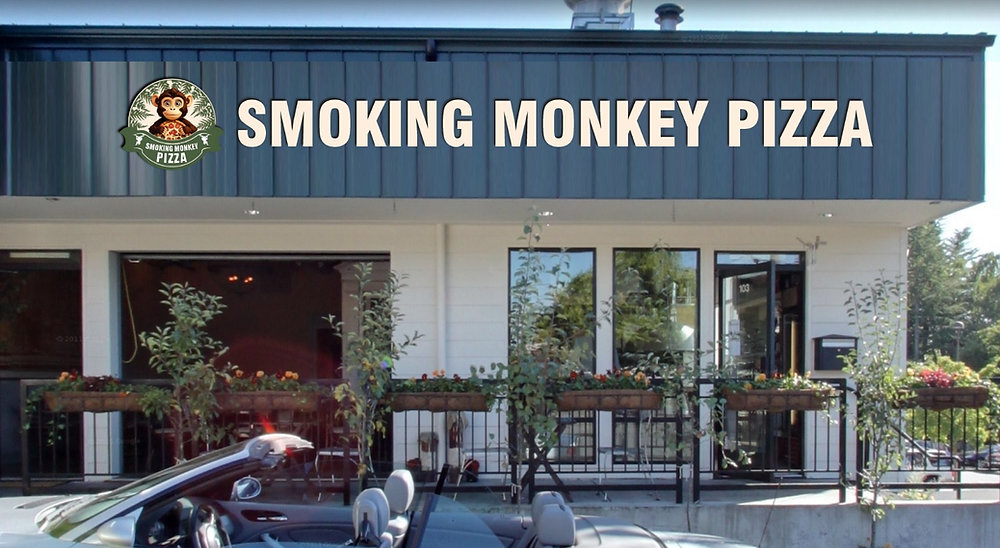
The Renton, Washington institution’s Chapter 11 filing is more than a single restaurant’s struggle. It’s a data point in a gathering storm that is forcing the entire pizza industry — from family-owned wood-fired gems to multinational chains with 3,500 locations — to confront a new and unforgiving economic reality.
In Renton, Washington, the smell of burning hardwood and bubbling mozzarella still drifts through the door. Families who work at the nearby Boeing campus have been filing into Smoking Monkey Pizza for more than a decade, ordering from a menu that spans 35 pizza varieties, a dozen pastas, and an array of calzones and strombolis that would embarrass many Italian-American restaurants four times its size. The wood-fired oven — the heart of the operation — has not gone cold. But the business that built itself around that oven is now seeking the protection of a federal bankruptcy court.
On May 12, 2026, TB Enterprises LLC, the parent company of Smoking Monkey Pizza, filed a voluntary petition for Chapter 11 bankruptcy reorganization in the U.S. Bankruptcy Court for the Western District of Washington in Seattle. The filing, first reported by Bankruptcy Observer and TheStreet, lists up to $50,000 in assets against liabilities ranging from $100,000 to $500,000 — a balance sheet that speaks less to catastrophic mismanagement than to the slow, grinding attrition of running a small independent restaurant chain in an era that has grown distinctly hostile to them.
The story of Smoking Monkey Pizza is, in miniature, the story of the American pizza industry in 2026: a saga of hard-won excellence colliding with macroeconomic forces that reward scale and punish craftsmanship.
Filing at a Glance — TB Enterprises LLC / Smoking Monkey Pizza
| Field | Detail |
|---|---|
| Filing Date | May 12, 2026 (U.S. Bankruptcy Court, W.D. Washington) |
| Chapter | 11 — Reorganization, not liquidation |
| Assets Listed | ≤ $50,000 (per court petition) |
| Liabilities Listed | $100,000–$500,000 (unsecured creditors list filed) |
| Locations Remaining | 2 — Renton + Seattle (McGraw St.) |
| Quality Rating | 95%+ — Quality Business Awards 2025 |
A Renton Institution, 14 Years in the Making
Smoking Monkey Pizza was never a concept designed for venture capital or national franchise rollouts. It was built the old-fashioned way: around a wood-fired oven, a commitment to scratch-made dough, and a menu broad enough to satisfy a table of eight with divergent appetites. Over 14 years, the chain developed a genuinely devoted following in a city that sits in the shadow of Boeing’s massive manufacturing complex — a community of shift workers, engineers, and families who prized consistency and quality over novelty.
That quality found external validation in 2025, when the Quality Business Awards recognized Smoking Monkey Pizza with a rating of over 95%, simultaneously naming it Best Pizza in Renton, Washington. For an independent operator without a marketing department or a national advertising budget, that kind of recognition is both an achievement and a lifeline — a signal to local diners that their loyalty is well-placed.
The menu is a testament to ambition: 35 pizza varieties ranging from classic margaritas to more adventurous wood-fired combinations, alongside 11 pasta dishes, 8 sandwiches, 5 calzones, 3 strombolis, 9 salads, and 5 desserts. Three locations — Renton, a Seattle outpost at 3111 W. McGraw Street in the Queen Anne neighborhood, and a newer Spokane location at 816 W. Sprague Avenue — represented an operator expanding with confidence. Expansion, as it turns out, would become part of the problem.
Timeline
- c. 2012 — Smoking Monkey Pizza founded in Renton, WA. Wood-fired oven concept takes root near Boeing manufacturing corridor.
- 2010s — Seattle location opens at 3111 W. McGraw St., Unit 103, extending reach into the broader Puget Sound dining market.
- 2024–2025 — Spokane location opens at 816 W. Sprague Ave. — the chain’s most ambitious geographic expansion.
- 2025 — Quality Business Awards confers 95%+ rating and names the chain Best Pizza in Renton.
- Early 2026 — Spokane location quietly closes, approximately two months before the bankruptcy filing.
- May 12, 2026 — TB Enterprises LLC files Chapter 11 in U.S. Bankruptcy Court, Western District of Washington.
The Anatomy of the Filing: Who Is Owed, and How Much
The creditor list in TB Enterprises’ petition reads as a granular X-ray of how a small restaurant chain sustains itself — and where it bleeds. The Washington Department of Revenue sits at the top of the unsecured creditors list, owed more than $52,000, a reminder that payroll taxes and sales tax remittances are among the first obligations to fall behind when cash flow tightens. Sysco, the national food distribution giant, is owed over $42,000 — a routine but telling detail, given that Sysco’s exposure appears in the creditor lists of bankrupt restaurants from San Francisco to Spokane with remarkable regularity.
The full picture of the unsecured creditors underscores how a restaurant’s financial obligations are woven into its daily operations: the payment processor, the energy utility, the specialty food suppliers. Each line item represents an ongoing relationship that has become strained.
| Creditor | Type | Amount Owed |
|---|---|---|
| Washington Dept. of Revenue | Tax Authority | > $52,000 |
| Sysco | Food Distributor | > $42,000 |
| Chase Card Services | Credit / Financing | > $39,000 |
| Gravity Payments | Payment Processing | > $37,000 |
| Greco | Food / Supply | > $35,000 |
| Puget Sound Energy | Utility | > $34,000 |
Notably, the filing does not indicate a single catastrophic event — no single debt dwarfs the others, no fraud, no leveraged acquisition gone wrong. This is the creditor map of an operation running on thin margins for too long, where every modest shortfall compounds into the next. The Spokane closure, roughly two months before the filing, was almost certainly a deliberate attempt to stanch the bleeding before seeking court protection — a pre-bankruptcy triage that lawyers and restructuring consultants routinely advise.
The creditor list is a portrait of gradual attrition, not sudden collapse. Food, taxes, energy, payments — the infrastructure of a restaurant’s daily existence, now itemized in a federal court document.
Chapter 11 as Lifeline: What Reorganization Actually Means
For many observers, the word “bankruptcy” conjures images of locked doors and liquidation sales. But Chapter 11 reorganization — the same legal mechanism used by airlines, retailers, and hospitality groups far larger than Smoking Monkey Pizza — is explicitly designed to allow a business to continue operating while restructuring the obligations that have become unmanageable. Under Chapter 11, TB Enterprises remains “in possession” of its assets and operations, retaining the authority to run the two surviving locations while developing a plan to repay creditors over time.
The primary tool in that plan will almost certainly be lease restructuring. Commercial lease obligations are consistently the most significant liability for restaurant operators, and the ability to renegotiate or reject leases under bankruptcy protection — while potentially assigning others — is often the decisive factor in whether a reorganization succeeds. The Renton and Seattle locations remain open; whether their leases are sustainable at current terms, renegotiable, or candidates for strategic modification will shape the outcome of the case.
The Question of Reopening Spokane
When asked about the Spokane closure, a person who answered the phone at one of the remaining Smoking Monkey locations told TheStreet that it was unclear whether the Sprague Avenue outpost would reopen. That ambiguity is itself informative: under Chapter 11, a debtor retains the option to reopen locations if the economics support it, but the practical likelihood diminishes with time. For Spokane diners who had recently discovered the chain, it is the first and most visible casualty of the filing.
A Sector Under Siege: Why 2026 Has Become a Watershed Year for Pizza Industry Closures
The bankruptcy of a 14-year-old, award-winning wood-fired pizza chain would be notable in any economic environment. In the context of 2026, it is one data point in a wave of closures and restructurings that has swept across the pizza industry with unusual force.
The most dramatic headline belongs to Papa John’s. On February 26, 2026, CEO Todd Penegor announced during the chain’s fourth-quarter earnings call that approximately 300 underperforming North American locations would close by the end of 2027 — roughly 200 of them this year alone. Alongside the closures, the company cut approximately 7% of its corporate workforce of around 700. North American same-store sales had fallen in seven of the previous eight quarters; the average unit volume of the locations being shuttered ran below $600,000 annually.
| Chain | Event | Scale |
|---|---|---|
| Papa John’s | 300 North America closures by 2027; 7% corporate workforce cut | ~200 in 2026 |
| Pizza Hut (Yum Brands) | 250 underperforming U.S. locations to close under Hut Forward plan | H1 2026 |
| Domino’s Enterprises (largest franchisee) | 205 low-performing locations closed | 2025 |
| Domino’s N. County Pizza (Oceanside, CA) | Chapter 11 filing | March 2025 |
| Fiorella (San Francisco, 4 locations) | Fourth Chapter 11 filing | March 6, 2026 |
| Smoking Monkey Pizza | Chapter 11 filing; Spokane location closed | May 2026 |
Pizza Hut’s trajectory is arguably the most alarming for observers of the sector. Yum Brands announced that it was planning to shut down 250 underperforming Pizza Hut locations in the first half of 2026 as part of its “Hut Forward” transformation plan, while simultaneously exploring a sale of the entire brand. The prospect of Yum Brands divesting its oldest pizza property speaks to a fundamental reassessment of what the Pizza Hut concept can be in a delivery-dominated landscape.
At the independent end of the spectrum, San Francisco’s Fiorella — a critically celebrated four-location wood-fired pizza operation — filed for Chapter 11 protection for the fourth time on March 6, 2026. That a restaurant of Fiorella’s caliber has cycled through bankruptcy proceedings four times in relatively rapid succession is a stark illustration of how the economics of the craft pizza segment have become structurally difficult to sustain even when the food itself is exceptional.
The Macroeconomic Forces Driving Pizza Restaurant Chapter 11 Filings
Food Cost Inflation: The Quiet Margin Killer
The wood-fired pizza category operates on ingredient quality in a way that standard pizza chains do not. The premium flour, the San Marzano tomatoes, the quality charcuterie and artisanal cheeses that distinguish a Smoking Monkey-style offering from a $7.99 delivery pizza are precisely the inputs that have been most affected by sustained food price inflation. For operators who built their pricing models on pre-pandemic input costs, the recalibration has been painful and often incomplete: menus repriced once, twice, three times still fail to keep pace when commodity costs remain elevated.
Labor Markets and the Pacific Northwest Premium
Washington State is among the highest-minimum-wage jurisdictions in the United States. For a restaurant that operates a wood-fired oven requiring skilled labor — pizza makers whose craft cannot be easily automated or deskilled — the labor cost line is both higher and less compressible than for competitors relying on pre-made dough and assembly-line production. Seattle’s notoriously competitive restaurant labor market amplifies this dynamic further.
Delivery Aggregators and the New Competitive Landscape
The rise of DoorDash, Uber Eats, and their competitors has fundamentally restructured the economics of restaurant delivery. For independent operators, the commission structures imposed by aggregator platforms — typically ranging from 15% to 30% of order value — can transform a nominally profitable delivery order into a loss-making transaction. The aggregators have simultaneously democratized consumer access to a city’s entire restaurant landscape and compressed the premium that quality operators once commanded.
Papa John’s North American same-store sales had declined in seven of the previous eight quarters. In a market this challenging, the question is not why independents like Smoking Monkey are filing for bankruptcy — it is how they survived as long as they did.
Post-Pandemic Consumer Behavior: The Dine-Out Pullback
Across the restaurant industry, analysts have documented a sustained pullback in discretionary dining expenditure as consumers — still feeling the cumulative effect of several years of inflation — prioritize value and frequency of dining over quality and experience. This dynamic has paradoxically been more damaging to the mid-premium independent segment than to either the value-oriented quick-service end or the high-end fine dining category, each of which maintains a clearer consumer value proposition. The $20–$30 pizza dinner sits in an uncomfortable middle ground: too expensive for value-seekers, insufficiently experiential for occasion diners.
Lessons from Those Who Have Navigated the Storm
Not all wood-fired pizza concepts have succumbed to these pressures. The cases of Blaze Pizza — which pivoted aggressively toward digital ordering and loyalty program mechanics — and regional operators who invested early in ghost kitchen infrastructure suggest that the path through is not impossible. Common threads among survivors include a ruthless focus on unit economics before expansion, a direct-ordering digital channel that bypasses aggregator commissions for a portion of delivery volume, and a willingness to treat bankruptcy protection proactively — as a restructuring tool rather than a last resort.
For Smoking Monkey Pizza specifically, the Chapter 11 filing preserves precisely these options. With two viable, award-recognized locations still operating and a customer base that has repeatedly validated the quality of the product, the brand equity is intact. What remains to be negotiated is the financial structure that allows that equity to generate sustainable returns.
What This Means for the Pacific Northwest Food Scene
The Pacific Northwest has, over the past two decades, developed one of the most sophisticated regional food cultures in North America — a scene that prizes local sourcing, artisanal technique, and the kind of chef-driven ownership that characterizes places like Smoking Monkey Pizza. The bankruptcy of a chain that received a 95%+ quality rating less than a year before its filing is a warning signal to independent operators across the region that goodwill and critical recognition are necessary but not sufficient conditions for survival.
For Seattle and Renton diners, the more immediate implication is practical: the two surviving locations remain open, and the reorganization process, if successful, should leave the brand intact. But the Spokane community that briefly welcomed Smoking Monkey Pizza to the Sprague Avenue corridor has lost something, and may not recover it. In mid-sized markets where a single quality independent operator can define an entire neighborhood’s dining identity, that loss carries weight beyond the balance sheet.
The wood-fired oven on South 3rd Street in Renton is still burning. Chapter 11 is not a eulogy — it is, at its best, a reset. For an industry in which the gap between excellent product and viable business model has never been wider, the Smoking Monkey Pizza story is not yet finished. But it is, unambiguously, a cautionary tale about what happens when the economics of craft outrun the economics of commerce — and a prompt for every independent operator still standing to examine their own margins before the court does it for them.
Looking Ahead: The Pizza Industry in 2026–2027
The industry’s near-term horizon remains challenging. Papa John’s has signaled that 2026 will continue to be difficult, with systemwide same-store sales expected to range from flat to low-single-digit declines in North America. Pizza Hut’s future as an independent brand is genuinely uncertain. And for the craft pizza segment that Smoking Monkey Pizza represents — operators who compete on quality rather than price, on experience rather than speed — the consolidation pressure is likely to intensify before it eases.
The operators who emerge strongest from this period will likely share several characteristics: manageable lease structures, direct digital relationships with their customer base, disciplined menu engineering that protects margins without sacrificing identity, and the kind of community embeddedness that transforms a restaurant from a dining option into a neighborhood institution. Smoking Monkey Pizza, at its Renton location, already has the last of these. The bankruptcy process will determine whether it can achieve the others.
For now, the oven stays lit.