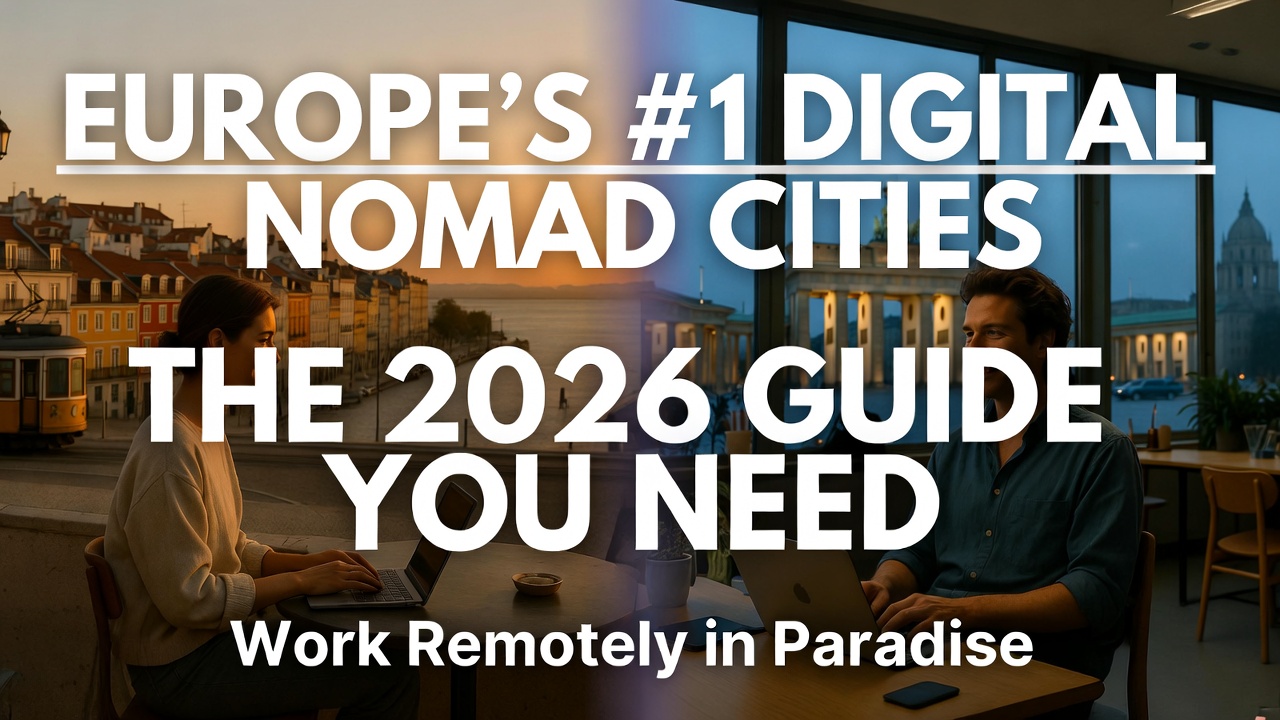
Europe has become the world’s top destination for digital nomads, with over 9 cities ranking among the most work-friendly destinations globally. Digital nomadism refers to the lifestyle of using technology to work remotely while traveling and living in different locations. Europe stands out as the ideal continent for remote workers due to its excellent internet infrastructure, diverse visa options, affordable living costs, and vibrant nomad communities.
What makes a city genuinely nomad-friendly? Four key factors determine success: reliable high-speed internet, reasonable cost of living, accessible visa requirements, and established remote work communities. This comprehensive guide covers all these elements across Europe’s top destinations, from budget-friendly Eastern European gems to premium Western European hubs.
You’ll discover detailed cost breakdowns, visa requirements, coworking space options, and WiFi reliability data to make informed decisions about your European nomad journey.
Key Takeaways
Europe offers 9 top-tier digital nomad cities with excellent infrastructure and affordable living costs. Monthly living expenses range from $1,200 in Split to $3,000 in Berlin, including accommodation and coworking spaces. Most European cities provide fiber internet speeds of 100+ Mbps for reliable remote work. Digital nomad visas are available in Portugal, Estonia, Spain, Croatia, and Hungary with income requirements from $2,000-$4,500 monthly. Coworking spaces cost between €10-€30 per day across major nomad destinations.

Why Choose Europe for Digital Nomad Travel
Europe’s internet infrastructure sets the global standard with fiber optic networks delivering 100+ Mbps speeds in major cities. This connectivity foundation supports seamless video calls, file transfers, and cloud-based collaboration essential for remote work success.
The continent offers diverse visa options including dedicated digital nomad programs in multiple countries. Portugal’s D8 visa, Estonia’s digital nomad permit, and Spain’s new remote work visa provide legal pathways for extended stays. These programs recognize the economic value remote workers bring to local economies.
Cultural diversity within short travel distances creates unique opportunities for nomads. You can experience Mediterranean coastal living in Valencia, historic charm in Prague, or cutting-edge tech culture in Tallinn, all within a few hours’ flight or train ride.
Strong digital nomad communities exist across European cities, providing networking opportunities and social connections. Established meetup groups, coworking events, and online communities help newcomers integrate quickly and build professional relationships.
Cost of living remains considerably more affordable than North America or Australia while maintaining high quality of life standards. Average internet speeds across top nomad cities exceed 100 Mbps, ensuring productivity matches or surpasses home office setups.
Time zone advantages benefit nomads working with global clients. European business hours overlap effectively with both Asian and American markets, facilitating international collaboration and client communication.
Top 9 European Cities for Digital Nomads
Western Europe Destinations
Lisbon, Portugal offers moderate living costs with Portugal’s strongest nomad community presence. The city provides excellent internet infrastructure averaging 100+ Mbps speeds and extensive coworking options. Portugal’s Digital Nomad Visa (D8) makes legal residence straightforward for qualifying remote workers earning €3,480 monthly.
Valencia, Spain serves as an affordable alternative to Madrid or Barcelona while maintaining Mediterranean lifestyle appeal. The city combines relaxed coastal culture with reliable connectivity and growing startup ecosystem. Spain’s new digital nomad visa program provides access for remote workers meeting income requirements.
Porto, Portugal delivers creative atmosphere with slower pace than Lisbon while maintaining access to the same visa benefits. Monthly costs run lower than the capital while preserving infrastructure quality. The city’s UNESCO World Heritage center provides inspiring work environments alongside modern amenities.
Berlin, Germany represents Europe’s major startup ecosystem and creative hub. Higher costs are offset by extensive networking opportunities and career advancement potential. Germany’s freelancer visa options enable extended stays for service providers and consultants.
Eastern Europe Gems
Prague, Czech Republic achieves perfect balance between affordability and rich historical setting. The growing tech scene supports emerging nomad communities while monthly costs remain reasonable. High-speed internet costs around €16 monthly for reliable fiber connections.
Budapest, Hungary maintains some of Europe’s lowest living costs among major capitals. Hungary’s White Card visa program specifically targets nomads and remote workers. The vibrant cultural scene combines affordability with excellent connectivity infrastructure.
Tallinn, Estonia provides tech-forward environment with innovative e-Residency program. Moderate costs pair with world-class digital infrastructure and strong government support for remote work initiatives. The city serves as a gateway to Nordic lifestyle and business culture.
Coastal & Unique Options
Split, Croatia combines coastal Mediterranean location with startup-friendly business environment. Year-round sunny climate supports outdoor lifestyle alongside professional development. Monthly costs range from $1,200-$1,800, making it the most affordable option among featured destinations.
Tbilisi, Georgia offers ultra-low living costs with unique cultural experiences. Visa-free access for many nationalities simplifies entry requirements. The emerging nomad destination provides growing infrastructure while maintaining authentic local character.
Essential Infrastructure: Internet & Coworking Spaces
Internet Speed Requirements & Availability
Remote work demands minimum speeds of 25+ Mbps download and 3+ Mbps upload for basic functionality. Video conferencing and file sharing require higher speeds for professional quality communication. All featured European cities offer fiber plans with 100+ Mbps speeds through major providers.
Monthly internet costs range from €16 in Prague to €50 in premium locations, depending on speed tiers and provider choice. Top providers include MEO and NOS in Portugal, Deutsche Telekom in Germany, and O2 or Vodafone across multiple countries.
Connection reliability matters more than peak speeds for consistent work quality. European fiber networks provide stable connections with minimal downtime compared to cable or DSL alternatives.
Coworking Space Landscape
Daily coworking rates range from €10 in Split and Tbilisi to €30 in Valencia and Berlin. These spaces provide professional work environments with backup internet, meeting rooms, and networking opportunities. Monthly memberships cost €88-€300 depending on city amenities and location prestige.
Popular international chains like WeWork, Regus, and Mindspace operate across multiple European cities with consistent quality standards. Local coworking options often provide better value and stronger community connections with resident nomads and entrepreneurs.
Flexible membership options accommodate nomad travel schedules with day passes, weekly rates, and month-to-month agreements. Many spaces offer reciprocal access programs enabling work privileges across partner locations.
Backup Connectivity Solutions
Cafe culture across European cities provides reliable WiFi backup options for location variety and social interaction. Mobile data plans and portable hotspots ensure connectivity during travel between cities or remote work sessions.
Public WiFi availability in city centers and transport hubs supports basic communication needs. However, security considerations require VPN usage on public networks for sensitive work activities.
Cost of Living Breakdown by City
| City | Monthly Range | Accommodation | Coworking | Internet |
|---|---|---|---|---|
| Tbilisi, Georgia | $1,300-$1,800 | $400-700 | $200-300 | $20-40 |
| Split, Croatia | $1,200-$1,800 | $500-800 | $200-300 | $60-80 |
| Budapest, Hungary | $1,500-$2,500 | $600-1,000 | $300-500 | $22 |
| Prague, Czech Republic | $1,500-$3,500 | $700-1,500 | $400-800 | $16 |
| Porto, Portugal | $1,500-$2,000 | $600-900 | $300-450 | $38-41 |
| Valencia, Spain | $1,700-$2,200 | $700-1,000 | $400-600 | $30-50 |
| Tallinn, Estonia | $1,700-$2,000 | $700-900 | $400-500 | $29-30 |
| Lisbon, Portugal | $1,500-$2,000 | $600-900 | $400-500 | $35-40 |
| Berlin, Germany | $2,500-$3,000 | $1,000-1,500 | $600-800 | $25-30 |
Budget-Friendly Options (Under $2,000/month)
Tbilisi and Split offer the lowest overall costs while maintaining adequate infrastructure for remote work. Eastern European cities provide excellent value propositions with quality of life matching more expensive Western destinations.
Seasonal variations affect accommodation costs considerably. Summer months in coastal cities like Split command premium prices while winter offers substantial savings for nomads with flexible schedules.
Mid-Range Destinations ($2,000-$2,500/month)
Valencia and Tallinn provide optimal value propositions balancing costs with infrastructure quality and community size. These cities offer established nomad networks without premium location pricing.
Monthly budgets should include buffer amounts for currency fluctuations and unexpected expenses. Healthcare costs, visa fees, and travel between cities add to baseline living expenses.
Premium Locations ($2,500+/month)
Berlin commands the highest costs but offers extensive networking opportunities and career advancement potential. Premium pricing reflects larger startup ecosystem, higher local salaries, and increased business opportunities.
Factor earning potential and professional development value when evaluating premium destinations. Higher costs may generate positive ROI through improved income opportunities and business connections.
Digital Nomad Visa Requirements & Application Process
Countries Offering Digital Nomad Visas
Portugal (D8 Visa) requires minimum income of €3,480 monthly with comprehensive documentation including accommodation proof, health insurance, and clean criminal record. Processing takes 60-90 days with initial validity of one year and renewable status.
Estonia Digital Nomad Visa sets higher income requirements at €4,500 net monthly income. The streamlined online application process typically completes within 30 days. The visa provides one-year validity with access to Estonian banking and healthcare systems.
Spain Digital Nomad Visa recently launched with €2,760 monthly income requirement. Applicants must prove remote work capability and maintain comprehensive health insurance coverage. The program targets long-term remote workers and freelancers.
Croatia Digital Nomad Visa requires €3,295 monthly income or equivalent savings demonstration. The program focuses on remote workers and freelancers with up to one-year validity periods. Application processing typically completes within 30-45 days.
Hungary White Card approximates €3,000 monthly income requirements for digital nomads and remote workers. Benefits include access to healthcare systems and simplified banking processes for temporary residents.
Alternative Visa Strategies
Tourist visas enable short-term stays up to 90 days within 180-day periods across Schengen zone countries. This approach suits nomads testing destinations before committing to longer-term arrangements.
Germany’s freelancer visa provides alternative pathway for service providers and consultants working with European clients. The program requires business plan submission and financial stability demonstration.
Income requirements range from €2,760 to €4,500 monthly across different national programs. Applicants should verify current requirements and processing times before committing to specific destinations.
Best WiFi Spots & Connectivity Resources
Reliable WiFi Locations by Category
Coworking Spaces provide guaranteed high-speed internet with backup connections and professional work environments. Meeting rooms, printing facilities, and networking opportunities justify premium pricing over cafe alternatives.
Cafes & Coffee Shops offer convenient social work environments across all featured cities. Lisbon favorites include Dear Breakfast, Copenhagen Coffee Lab, and Rebel Cafe. Berlin nomads frequent 19grams Alex and Father Carpenter Coffee Brewers. Prague options include historic Café Louvre and trendy La Bohème Café.
Valencia provides excellent cafe culture with Dulce de Leche Boutique and Bluebell Coffee Roasters supporting remote work. Porto nomads recommend C’alma, Combi Coffee Roasters, and Fabrica Coffee Roasters for reliable connectivity and inspiring atmospheres.
Hotels & Accommodations vary considerably in internet quality. Business hotels typically offer fastest speeds with dedicated business centers. Aparthotels and serviced apartments provide consistent connectivity for extended stays.
Essential Digital Nomad Apps & Resources
Nomad List delivers comprehensive city comparisons with real nomad reviews and cost data. The platform provides community insights beyond basic statistics and official tourism information.
Airalo enables international data plans and eSIM solutions for seamless connectivity across borders. Multiple carrier options provide backup connectivity and local number access.
NordVPN ensures secure connections and geo-restriction bypass for accessing home country services. Banking, streaming, and business applications often require VPN usage while traveling.
Coworker.com facilitates coworking space discovery and booking with verified reviews and current pricing. The platform supports advance booking and membership comparison across cities.
Backup Connectivity Solutions
Portable WiFi hotspots provide reliable internet for remote locations and backup during primary connection failures. Local SIM cards from multiple providers ensure redundancy during important work sessions.
Cafe-hopping strategies provide location variety while maintaining productivity. Research multiple options in each neighborhood to avoid dependency on single establishments.
Practical Tips for European Nomad Success
Planning Your Route
Consider seasonal weather patterns and tourist seasons when scheduling city visits. Summer coastal destinations command premium prices while offering optimal climate conditions. Shoulder seasons provide cost savings with acceptable weather trade-offs.
Plan routes around visa limitations and border requirements. Schenzen zone restrictions affect movement timing while individual country nomad visas may require specific entry procedures.
Allow schedule flexibility for extending stays in preferred destinations. Many nomads discover unexpected city preferences requiring itinerary adjustments and budget reallocation.
Financial Management
Multi-currency accounts through Wise or Revolut minimize foreign exchange fees and provide local banking access. These services offer competitive exchange rates and reduced transaction costs compared to traditional banks.
Budget for currency fluctuations and seasonal price variations when planning extended stays. Economic conditions and exchange rate changes can impact monthly costs over time.
Track expenses across different cost-of-living environments to identify spending patterns and optimization opportunities. Lifestyle inflation often occurs unconsciously when moving between cities.
Community Integration
Join local nomad communities through Facebook groups, Meetup organizations, and coworking events. Established networks provide practical advice, social connections, and professional opportunities.
Participate in networking events and startup meetups to build business relationships beyond nomad circles. Local professional communities offer career advancement opportunities and client development potential.
Learn basic local language phrases for better integration and cultural appreciation. Simple greetings and common phrases improve daily interactions and demonstrate respect for local culture.
Health & Insurance Considerations
Comprehensive travel health insurance provides essential protection across European healthcare systems. Coverage should include emergency treatment, prescription medications, and medical evacuation if necessary.
Research healthcare quality and costs in destination countries before arrival. Some locations offer excellent public healthcare while others require private medical services for optimal care.
Maintain prescription medication supplies across borders with proper documentation. Carry prescriptions in original containers with medical certificates for customs and pharmacy access.
Frequently Asked Questions
What’s the minimum income needed for European digital nomad visas? Income requirements range from €2,760 monthly for Spain’s program to €4,500 for Estonia’s visa. Most countries require proof of consistent remote income rather than freelance project payments.
Which European city offers the best value for digital nomads? Split, Croatia and Tbilisi, Georgia provide the lowest costs at $1,200-$1,800 monthly while maintaining adequate infrastructure. Budget-conscious nomads should consider Eastern European destinations for optimal value.
How fast is internet speed in European nomad cities? All featured destinations offer fiber internet plans with 100+ Mbps speeds. Average costs range from €16 in Prague to €50 in premium locations, with most cities providing reliable connections for professional work.
Can I work legally as a digital nomad in Europe without a special visa? Tourist visas allow 90 days in 180-day periods across Schengen countries, but working restrictions vary by nationality and destination. Digital nomad visas provide clearer legal structure for extended remote work.
What are daily coworking space costs across European cities? Daily rates range from €10 in Split and Tbilisi to €30 in Berlin and Valencia. Monthly memberships cost €88-€300 depending on amenities and location, with local options often providing better community value than international chains.
Europe’s diverse nomad destinations offer options for every budget and lifestyle preference. Monthly costs ranging from $1,200 to $3,000 provide flexibility for different financial situations while maintaining high quality of life standards. The combination of excellent infrastructure, supportive visa programs, and vibrant communities makes Europe the top choice for remote workers seeking international lifestyle experiences.
Success as a European nomad requires matching city choice to personal priorities including cost considerations, community preferences, climate requirements, and career opportunities. Start with thorough research and realistic budgeting to ensure your European nomad journey achieves both professional and personal objectives. For comprehensive travel tips and destination guides to enhance your planning, consider exploring additional resources. When ready to book your journey, check out the best booking sites for deals.