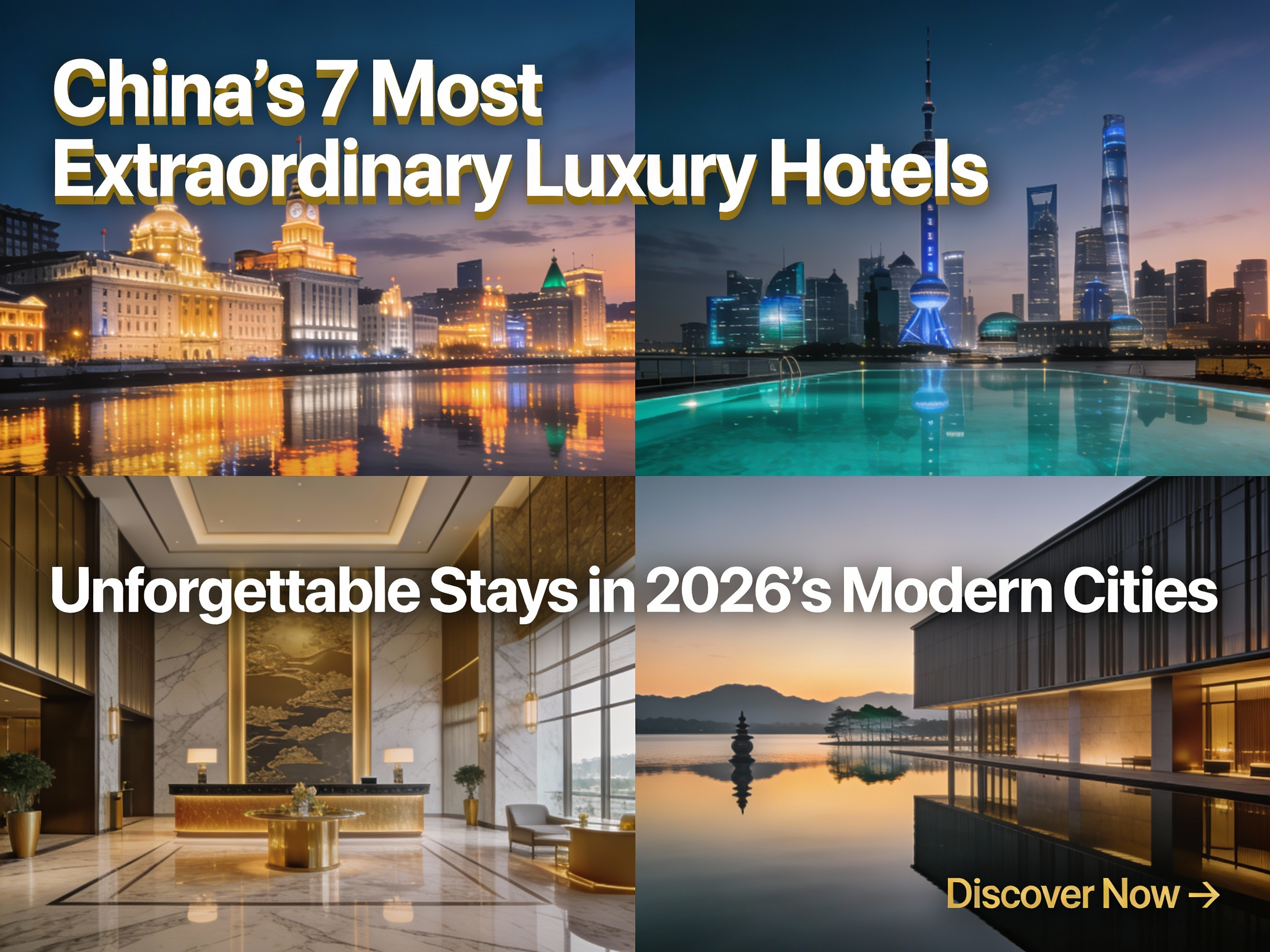
The skyline of Shanghai, a kinetic sculpture of light and ambition, unfolds silently 25 stories beneath my feet. In my hand, a cup of tea, its leaves sourced from a mist-shrouded hillside a thousand miles to the southwest. This is the defining paradox—and the profound allure—of luxury travel in modern China circa 2026. It is a moment suspended between vertiginous futurism and rooted tranquility, between the pulse of a global megacity and the whisper of ancient tradition. As the nation’s post-2025 economic rebound solidifies, fuelling a new era of urban innovation and sophisticated domestic consumption, its best luxury hotels in China 2026 have evolved from mere accommodations into curators of profoundly nuanced experiences. They are not just places to sleep; they are portals to understanding the complex soul of contemporary China.
Gone are the days of generic opulence. Today’s top hotels in modern Chinese cities compete on a new frontier: the seamless integration of hyper-personalized technology, a bold architectural statement that dialogues with its urban context, a service philosophy that anticipates desire before it is voiced, and a genuine, often stunningly beautiful, engagement with Chinese aesthetics and sustainability. This is modern China luxury travel at its apex—confident, creative, and culturally rich. Having traversed these cities as they awaken to this new chapter, I’ve curated a list not merely of places to stay, but of destinations in themselves. These seven properties, consistently lauded in the 2025 editions of the most respected industry awards, represent the pinnacle of what the discerning traveler seeks today. They are the standard-bearers for the best hotels in China for experiences that linger long after departure.
Why Modern China’s Cities Are Redefining Luxury Travel
To understand the selections that follow, one must first grasp the landscape. China’s urban centers, having navigated the global shifts of the early 2020s, are now engines of a refined, experience-driven economy. The traveler in 2026, whether international or the increasingly influential Chinese luxury seeker, demands more. They seek narrative, wellness, exclusivity, and a authentic sense of place. Hotels have responded by becoming microcosms of their cities. In Shanghai, it’s about art, global finance, and Jazz Age glamour reimagined. In Beijing, it’s the interplay of imperial gravitas and cutting-edge policy. In Shenzhen and Guangzhou, it’s a testament to tech-driven dynamism and trade. In Hangzhou and Chengdu, it’s an embrace of poetic landscape and slower, sensual pleasures.
This evolution is tracked rigorously by authorities like the Forbes Travel Guide and the Condé Nast Traveler Readers’ Choice Awards, whose 2025 lists notably highlighted a surge in properties emphasizing localized design narratives and green credentials. Furthermore, as noted in a recent Financial Times analysis, China’s luxury sector is pivoting towards “quiet wealth” and experiential depth over blatant display. The hotels leading this charge offer not just a room, but a key to the city’s hidden rhythms—a private tea masterclass, access to a coveted artist’s studio, or a dawn Tai Chi session in a skypark unseen by the public. This is the new currency of luxury hotels Shanghai 2026, best hotels Beijing for travelers, and their peers across the nation.
The Definitive List: 7 Hotels Shaping 2026
1. The Peninsula Shanghai: Timeless Grandeur Meets Digital Sovereignty

Standing sentinel at the confluence of the historic Bund and the bustling Huangpu River, The Peninsula Shanghai has long been a synonym for classic luxury. Yet, in 2026, it feels more essential than ever—not as a relic, but as a masterclass in evolutionary excellence. Its secret lies in a flawless, nearly invisible, integration of its legendary, orchestrated service (think Rolls-Royce phaetons and white-gloved porters) with a level of in-room tech personalization that sets the global standard. Every interaction, from drapes to do-not-disturb, is controlled via a custom-designed bedside tablet, a system so intuitive it feels telepathic.
But the true magic is in its curated experiences. Its three-Michelin-starred culinary journey, led by master chefs, is a headline, but ask the concierge to arrange a private after-hours tour of the nearby Rockbund Art Museum, followed by a jazz-era cocktail in the hotel’s Salon de Ning speakeasy. The hotel’s recent top honors in the Travel + Leisure World’s Best Awards 2025 are a testament to its unwavering ability to make every guest feel like the center of its universe. For the ultimate experience, book a Bund-facing suite and watch the river’s ballet of heritage and hyper-modernity—a living portrait of Shanghai itself.
2. Amanfayuan, Beijing: The Imperial Sanctuary

While most seek luxury hotels Beijing in glass towers near the financial districts, the most unforgettable stay in 2026 lies hidden within the sacred grounds of the Fayuan Temple, in the city’s southwestern quarter. Amanfayuan is less a hotel and more a living museum, a series of restored siheyuan (courtyard houses) dating back to the Ming Dynasty. In a city hurtling towards the future, this Aman property offers a profound stillness, a direct dialogue with Beijing’s spiritual and architectural heritage. The sound here is not of traffic, but of wind in ancient cypress trees and the distant chant of monks.
The experience is one of deep cultural immersion. Participate in a private sutra-copying session with a temple scholar, or engage in a guided meditation at dawn before the public arrives. The spa’s treatments are based on ancient Chinese medicinal principles, using herbs grown in the resort’s own garden. As DestinAsian magazine’s 2025 Luxe List highlighted, Amanfayuan represents the pinnacle of “anti-glamour” luxury—where richness is measured in serenity, space, and access to a timeless China. It is the definitive answer for travelers asking not just where to stay, but how to feel Beijing’s millennia-old soul.
3. Bvlgari Hotel Shanghai: The Modern Magnifico

If The Peninsula is the established aristocrat, the Bvlgari Hotel Shanghai is the dazzling, contemporary magnate. Nestled within the soaring, twisting form of the Suhewan mixed-use development, its presence is a powerful statement on modern China luxury travel. The design, a collaboration between Italian master Antonio Citterio and local architectural firms, is a bold fusion of Milanese mid-century flair and subtle Chinese motifs—intricate latticework reinterpreted in sleek metal, black granite echoing ink-wash paintings. It’s a favorite among the design-conscious elite and a regular feature in architectural digests worldwide.
The hotel’Social centerpiece is its 47th-floor rooftop bar, where the glittering panorama of the Pudong skyline seems close enough to touch. Yet, its experiential genius is grounded. The Bvlgari-branded yachting experience on the Huangpu offers a unique vantage point of the city, while its collaboration with the nearby Shanghai Jewelry & Jade Exchange allows for private viewings of exceptional pieces. It’s a hotel that understands luxury in 2026 is multi-sensory and deeply personal, catering to those who see their travel choices as an extension of their personal aesthetic. For a stay that epitomizes the power and polish of today’s Shanghai, this is the address.
4. The Langham, Shenzhen: A Symphony in Rose Gold

Shenzhen, the Silicon Valley of China, demands a hotel that reflects its ethos of disruptive innovation and relentless energy. The Langham, Shenzhen, in the heart of the Nanshan tech district, answers that call not with cold futurism, but with breathtaking warmth. Its signature rose gold aesthetic flows through the entire property, from the stunning, cathedral-like atrium lobby to the elegant guest rooms, creating a sense of cohesive, radiant glamour. It has consistently been recognized by the World Travel Awards as China’s leading business hotel, but its appeal to leisure travelers in 2026 is what makes it remarkable.
Beyond its flawless meetings facilities, the hotel offers curated “Tech Titan” experiences—private tours of leading design studios or innovation hubs in the district. Its Chuan Spa is a sanctuary of TCM (Traditional Chinese Medicine) in a city of digital pace, and its Michelin-starred Jade Palace serves exquisite Cantonese cuisine that rivals the best in Guangzhou. In a metropolis built on speed, The Langham masters the luxury of contrast: it provides the calm, cultured, and extraordinarily beautiful counterpoint to Shenzhen’s exhilarating chaos, making it the undisputed leader for luxury hotels Shenzhen has to offer.
5. Four Seasons Hotel Hangzhou at West Lake: A Living Painting

Some hotels have a view; the Four Seasons Hangzhou at West Lake exists within the view. This sprawling resort, designed like a traditional Jiangnan water village, is seamlessly woven into the poetic landscape that has inspired poets and painters for a thousand years. Pavilions, gardens, and waterways are arranged with feng shui precision, with every guest room and villa offering a framed perspective of serenity—whether it’s of lotus ponds, lush bamboo groves, or the misty lake itself. In 2026, as travelers seek meaningful reconnection with nature, this property is more relevant than ever.
The experience is one of gentle activity and profound peace. Paddle a handcrafted wooden boat through the hotel’s private canals at sunset. Join a master for a lakeside ink-brush painting class. Dine at the acclaimed Jin Sha restaurant, where locally foraged ingredients are transformed into culinary art. The hotel’s commitment to preserving the local ecosystem is deeply integrated into its operations, a fact celebrated in sustainable luxury travel reports. This isn’t just a place to stay; it’s an invitation to live, for a few days, inside a classical Chinese dream.
6. Rosewood Guangzhou: Sky-High Cantonese Sophistication

Rising from the top 39 floors of the 108-story CTF Finance Centre, Rosewood Guangzhou is quite literally a hotel at the peak. It masterfully translates the warmth, generosity, and exquisite craft of Cantonese culture to the clouds. The design by the acclaimed firm Yabu Pushelberg is residential and art-focused, feeling more like the sublime apartment of a vastly discerning collector than a corporate hotel. It’s a narrative of “courtyards in the sky,” with indoor gardens and artisanal details that draw the eye inward and downward from the city’s staggering panoramas.
The experiences here are layered. At Café Gray Deluxe, the highest bar in the city, you can sip a bespoke cocktail while watching thunderstorms roll in beneath the observation deck. The hotel’s “Guangfu Cultural Ambassador” can arrange private tours of the historic Xiguan district or a dim sum masterclass with a fifth-generation chef. It has been a fixture on the Forbes Travel Guide Five-Star list since its opening for its impeccable, intuitive service. For the traveler seeking a deep dive into the soul of southern China—its commerce, its cuisine, its contemporary art scene—from a breathtakingly privileged vantage point, Rosewood Guangzhou is unparalleled.
7. Capella Shanghai, Jian Ye Li: The Bespoke Time Machine

Tucked within the restored shikumen (stone-gate) lanes of the former French Concession, Capella Shanghai offers a radically intimate alternative to the city’s vertical giants. This all-villa urban resort is a masterpiece of conservation and privacy. Each villa blends historic brickwork with sleek, contemporary interiors and a private courtyard or plunge pool. The service model is built around a personal “Aurora” butler, who orchestrates your entire stay with meticulous, anticipatory care—from unpacking your luggage to securing a reservation at the city’s most exclusive new supper club.
What sets it apart in 2026 is its hyper-local curation. The hotel is its own cultural capsule within the lively Jian Ye Li neighborhood. They offer walking maps crafted by local historians, private talks with Shanghainese novelists in the library, and mixology classes using traditional Chinese baijiu. It’s a favorite of celebrities and CEOs precisely because it offers an invisible, utterly controlled haven of peace and personality. As analyzed in a recent Economist special on urban tourism, this trend towards “micro-neighborhood immersion” is defining the next wave of luxury. Capella Shanghai is its global exemplar.
Conclusion: The Future Is Experiential, Personal, and Rooted
The trajectory of China’s luxury hotel scene, as illustrated by these seven standout properties, points toward a future where the very definition of “luxury” is being rewritten. It is no longer just about marble and thread count. It is about access—to culture, to tranquility, to unique perspectives. It is about narrative—a stay that tells a story about its city. And it is increasingly about integrity—a genuine commitment to sustainability and cultural preservation that enhances rather than exploits.
These top China hotels 2026 show that the most powerful luxury in modern China is the luxury of context. They provide the perfect, curated base from which to engage with the continent’s most dynamic cities—whether you’re decoding the future in Shenzhen, tracing imperial history in Beijing, or capturing the romantic pulse of Shanghai. They prove that in the heart of the world’s most rapid urban transformations, one can still find moments of profound human connection, breathtaking beauty, and unforgettable peace.
FAQ: Navigating China’s Luxury Landscape in 2026
What are the best luxury hotels in China right now?
Based on the latest 2025-2026 awards from Condé Nast Traveler, Forbes Travel Guide, and the World Travel Awards, the current leaders include The Peninsula Shanghai for timeless, tech-integrated service; Amanfayuan in Beijing for unparalleled cultural immersion; and Capella Shanghai for ultimate privacy and neighborhood immersion. The list above details the full top-tier selection.
Where should I stay in modern Chinese cities for an authentic experience?
Focus on hotels that act as cultural conduits. In Beijing, choose a property like Amanfayuan for historical depth. In Shanghai, consider Capella in the French Concession or The Peninsula on the Bund for location narrative. In Shenzhen, The Langham offers a stunning counterpoint to the tech environment. In Hangzhou, the Four Seasons at West Lake is the only choice for a landscape-integrated experience.
How is luxury travel in China changing in 2026?
The shift is decisively towards experiential and sustainable luxury. Travelers seek personalized, culturally rich interactions over ostentatious displays. Hotels are responding with hyper-local programming, deeper wellness offerings rooted in TCM, advanced but discreet technology, and stronger commitments to environmental and cultural sustainability, as seen in the operations of the Four Seasons Hangzhou and Rosewood Guangzhou.
Are these hotels suitable for both business and leisure travelers?
Absolutely. Properties like The Langham Shenzhen, Rosewood Guangzhou, and The Peninsula Shanghai are engineered for business efficiency with world-class facilities. However, their curated cultural experiences, supreme wellness centers, and iconic dining make them equally compelling for leisure stays. They successfully blur the line, allowing a business traveler to seamlessly extend a trip into a deeply rewarding personal journey.
What is the best time of year to visit these luxury hotels in China?
Spring (April-May) and Autumn (September-October) generally offer the most pleasant weather nationwide. For city stays in Shanghai, Beijing, and Guangzhou, these seasons are ideal. Hangzhou is particularly magical in autumn. Shenzhen is a year-round destination, though summers are hot and humid. Always check for major Chinese national holidays (e.g., Golden Week in October) when domestic travel peaks.