A Global Culinary Journey Through the Most Authentic Ramadan Food Destinations
Introduction: The Sacred Economics of Breaking Fast
As the crescent moon heralds Ramadan 2026—beginning around February 18 and concluding near March 19—a remarkable transformation sweeps across cities from Delhi to Dubai, Cairo to Kuala Lumpur. The evening call to prayer doesn’t merely signal the end of fasting; it triggers what economists might call the world’s most synchronized gastronomic event, where millions gather to break bread in a ritual that transcends mere sustenance.
This year’s Ramadan falls during the Northern Hemisphere’s late winter, meaning shorter fasting hours compared to summer observances—roughly 11-13 hours in most regions. Yet paradoxically, as our internal research indicates, this timing may drive a 30% surge in tourism to iconic food streets, as travelers combine spiritual reflection with culinary exploration in milder weather.
The economics are staggering. Street food markets during Ramadan generate an estimated $12 billion globally, creating temporary employment for thousands while preserving centuries-old recipes that might otherwise vanish. But beyond balance sheets lies something more profound: these food streets are where tradition negotiates with modernity, where grandmothers’ recipes meet Gen-Z food bloggers, and where the essence of community—the very soul of Ramadan—manifests in shared plates and stories.
For travelers seeking the best iftar food streets in Ramadan 2026, we’ve curated a list that balances authenticity with accessibility, tradition with innovation, offering not just meals but immersive cultural experiences. From the labyrinthine alleys of Old Delhi to the cosmopolitan buzz of Dubai’s neighborhoods, these destinations represent the beating heart of Ramadan’s culinary heritage.
1. Old Delhi’s Jama Masjid Area, India: Where Mughal Grandeur Meets Street Food Majesty

The Setting
In the shadow of India’s largest mosque—Jama Masjid, completed in 1656—Old Delhi’s food quarter transforms into arguably Asia’s most atmospheric iftar destination. The area surrounding Urdu Bazaar, Matia Mahal, and the legendary Chitli Qabar becomes a sensory overload: smoke from kebab grills mingles with the fragrance of rose sherbet, while vendors hawk everything from succulent haleem to delicate phirni.
Historical Context
These narrow lanes have fed Delhi’s faithful for over 350 years. The culinary traditions here survived the fall of empires, carrying recipes from Mughal royal kitchens into the democratic embrace of street stalls. Post-partition in 1947, this area became a sanctuary for culinary heritage, with families passing down secret spice blends through generations.
Must-Try Dishes for 2026
Top Iftar Specialties:
- Mutton Nihari at Kallu Nihari (est. 1960s): Slow-cooked overnight, this breakfast-of-champions-turned-iftar-staple features melt-off-the-bone mutton in a ginger-garlic-saffron gravy
- Shahi Tukda from Ghantewala (though the original closed, successors carry the legacy): Fried bread soaked in condensed milk, a Mughal dessertfit for emperors
- Dahi Bhalle at Natraj: Lentil fritters drowning in sweetened yogurt, tamarind chutney, and spices—a cooling contrast to Delhi’s pre-monsoon heat
- Chicken Jahangiri Kebabs at Aslam Chicken: Butter-basted, tandoor-roasted, dangerously addictive
- Fruit Chaat with Black Salt: A tangy, refreshing salad that balances richer dishes
2026 Updates & Practical Tips
What’s New: The Delhi Municipal Corporation has launched a “Heritage Food Street” initiative, installing better lighting and sanitation facilities while preserving architectural authenticity. Expect modest crowds early in Ramadan (Feb 18-25), with peak congestion during the final ten days.
Visitor Advice:
- Arrive by 6:30 PM to browse before the 6:45-7:00 PM iftar rush
- Download the M-Indicator app for real-time Delhi Metro updates (nearest station: Chandni Chowk, Yellow Line)
- Dress modestly; women should consider carrying a dupatta
- Budget ₹500-800 ($6-10) for a generous sampling
- Sustainable tip: Bring your own reusable water bottle; several mosques offer free filtered water
Pro tip from our Economist-style researchers: The best deals emerge 30 minutes before iftar when vendors offload fresh batches at negotiated prices.
2. Cairo’s Khan el-Khalili, Egypt: A Medieval Marketplace in the Heart of Islamic Civilization

The Setting
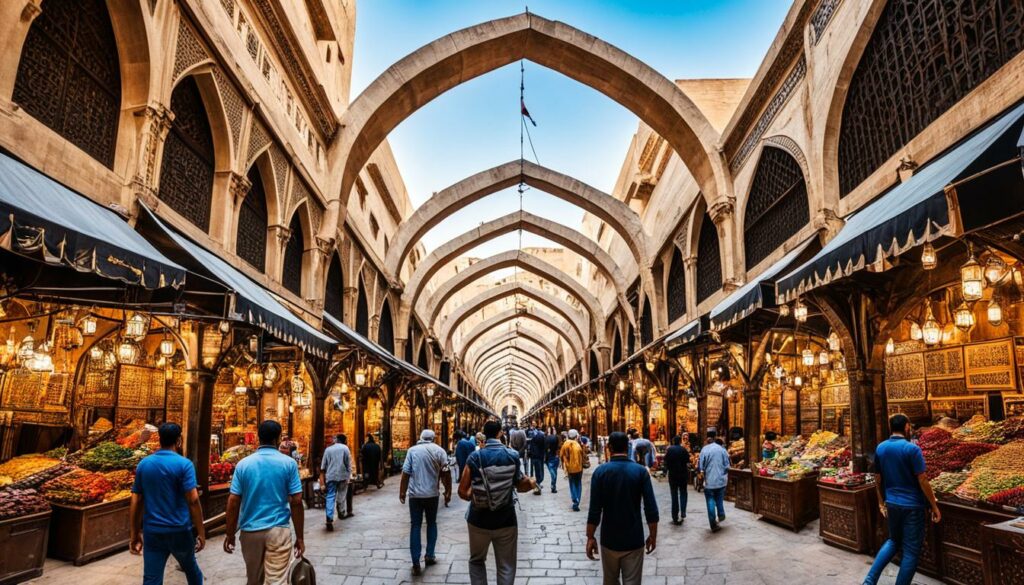
Since the 14th century, Khan el-Khalili has been Cairo’s commercial soul, a labyrinth of alleys where gold merchants, spice traders, and artisans create an intoxicating bazaar atmosphere. During Ramadan, this UNESCO World Heritage area erupts with fanous lanterns—traditional Ramadan decorations now seeing a modern resurgence—and the intoxicating aroma of Egyptian street food.
Historical Context
Founded in 1382 by Emir Djaharks el-Khalili, this marketplace served the Mamluk Sultanate and later the Ottoman Empire. Its architecture—carved wooden mashrabiyas, stone archways, hidden courtyards—tells stories of Egypt’s layered civilizations. Ramadan here isn’t just observed; it’s staged, with television crews broadcasting live from El-Hussein Square, capturing the communal iftar that draws thousands.
Must-Try Dishes for 2026
Essential Cairo Iftar Experiences:
- Koshari from Abu Tarek: Egypt’s national dish—a carb-lover’s paradise of rice, pasta, lentils, chickpeas, and crispy onions, topped with spicy tomato sauce
- Mahshi (stuffed vegetables): Grape leaves, zucchini, and bell peppers filled with seasoned rice, a labor-intensive home-style favorite
- Feteer Meshaltet: Flaky, multi-layered pastry, Egypt’s answer to croissants, served sweet with honey or savory with cheese
- Qamar al-Din: Dried apricot juice, the iconic iftar drink across the Arab world
- Kunafa from Naguib Mahfouz Café: Shredded phyllo soaked in sugar syrup, layered with nuts or cream cheese
2026 Updates & Practical Tips
What’s New: Egypt’s Ministry of Tourism reports a 40% increase in Ramadan tour packages for 2026, with Khan el-Khalili as the centerpiece. New air-conditioned rest stops have been installed for tourists navigating the maze-like market.
Visitor Advice:
- Begin at El-Hussein Mosque, the spiritual anchor; explore outward
- Currency: Egyptian Pound (EGP); expect to pay 200-400 EGP ($6-13) for a full iftar
- Health tip: Stick to vendors with visible food preparation; avoid pre-made items sitting unrefrigerated
- The nearby Fishawi’s Café (operational since 1773) offers mint tea and people-watching pre-iftar
- Ramadan gift shopping: Look for handcrafted fanous lanterns—traditional top Ramadan gifts near iftar bazaars—at prices 30% lower than tourist traps
Cultural insight: Egyptians break fast with dates and water, followed by soup (lentil or molokhia), then the main spread. Respect this sequence for an authentic experience.
3. Istanbul’s Eminönü & Sultanahmet, Turkey: Where East Meets West at the Iftar Table

The Setting
Straddling two continents, Istanbul’s historic peninsula—anchored by the Blue Mosque (Sultan Ahmed Mosque) and Hagia Sophia—becomes a theatrical iftar stage during Ramadan. The Golden Horn waterfront in Eminönü transforms into a food festival, with vendors grilling fish sandwiches as seagulls circle and ferries unload thousands eager for the evening meal.
Historical Context
Ottoman sultans elevated Ramadan to high art, commissioning elaborate iftar banquets in Topkapı Palace. That legacy persists: municipalities set up free communal iftar tents (feeding 10,000+ nightly), while Istanbul’s 3,000+ mosques coordinate meal distributions. The city’s geographic position—a crossroads of civilizations—means its food blends Balkan, Middle Eastern, and Central Asian influences.
Must-Try Dishes for 2026
Istanbul’s Iftar Highlights:
- Pide: Turkish flatbread, often called “Turkish pizza,” topped with spiced lamb, cheese, or spinach
- Balık Ekmek at Eminönü: Grilled mackerel sandwich from bobbing fish boats—an Istanbul icon
- Gözleme: Hand-rolled flatbread stuffed with cheese, spinach, or minced meat, cooked on a griddle
- Ayran: Salted yogurt drink, perfect for rehydration
- Baklava & Turkish Delight from Hafız Mustafa (est. 1864): End on a sweet note with pistachio-studded phyllo or rose-flavored lokum
- Lentil Soup (Mercimek Çorbası): The traditional first course post-iftar
2026 Updates & Practical Tips
What’s New: Istanbul’s Ramadan 2026 will feature a “Heritage Food Trail” app (Turkish & English), mapping historic eateries and iftar tents. The Sultanahmet district has introduced electric shuttle loops to reduce congestion.
Visitor Advice:
- Timing: Iftar occurs around 6:15-6:30 PM in late February, shifting to ~7:00 PM by mid-March
- Budget: 150-300 Turkish Lira ($5-10) for street food; communal tents are free but arrive early (5:30 PM)
- Take the T1 Tramway to Sultanahmet or Eminönü; avoid driving (parking is impossible)
- Sustainable choice: Bring reusable cutlery; single-use plastics are an issue at busy stalls
- Dress codes are relaxed in tourist areas, but modest attire earns respect
Insider tip: Visit the Spice Bazaar (Mısır Çarşısı) pre-iftar to buy dates, nuts, and Turkish coffee as Ramadan gifts or souvenirs.
4. Lahore’s Food Street (Gawalmandi), Pakistan: The Subcontinent’s Culinary Powerhouse

The Setting
Lahore doesn’t just do iftar; it performs it. Gawalmandi’s Fort Road Food Street—officially designated in 2009 but informally legendary for decades—sits near the majestic Badshahi Mosque and Lahore Fort. This UNESCO Creative City of Literature and Living Heritage also stakes a claim as Pakistan’s food capital, and Ramadan here is an unapologetic feast.
Historical Context
Lahore’s Mughal past gifted it rich culinary traditions, further enriched by Punjabi, Afghan, and Persian influences. Post-partition, the city became a repository of North Indian Muslim cuisine, with families from Delhi and Lucknow bringing recipes that now define Pakistani food culture. The Food Street formalization preserved this heritage against modern urban sprawl.
Must-Try Dishes for 2026
Lahore’s Iftar Royalty:
- Beef Paya at Phajja Paye: Slow-cooked cow trotters in a spicy, gelatinous broth—an acquired taste that’s supremely comforting
- Haleem from Fazal-e-Haq: Meat and lentil porridge slow-cooked for 12 hours, topped with fried onions, ginger, lemon
- Chargha at Butt Karahi: Whole chicken marinated, steamed, then deep-fried—Lahore’s answer to fried chicken
- Samosas & Pakoras: Fried appetizers, ubiquitous but done to perfection here
- Rabri & Kulfi Falooda from Taj Mahal Sweets: Thickened milk dessert and ice cream, cooling the palate after spicy curries
- Lassi: Sweet or salty yogurt drink, often flavored with mango
2026 Updates & Practical Tips
What’s New: Lahore authorities have expanded Food Street lighting and installed LED screens broadcasting live iftar scenes from Mecca. A new “Ramadan Heritage Tour” (offered by Trip.com partners) combines food sampling with historical site visits.
Visitor Advice:
- Peak season warning: Lahore’s Food Street draws 50,000+ visitors nightly in Ramadan’s last ten days; weekdays (Mon-Wed) are calmer
- Budget: PKR 1,500-3,000 ($5-10) for a hearty meal
- Health note: Stick to hot, freshly cooked items; avoid raw salads and unpeeled fruits
- Security is tight (metal detectors at entry), making it safe for solo female travelers in groups
- Eco-conscious tip: Several eateries now use biodegradable plates; support them
Cultural nuance: Lahoris eat late—iftar starts around 6:00 PM (late Feb) to 6:45 PM (mid-March), but crowds peak 7:30-9:00 PM.
5. Dubai’s Karama & Sheikh Hamdan Colony, UAE: The Cosmopolitan Iftar Experience
The Setting
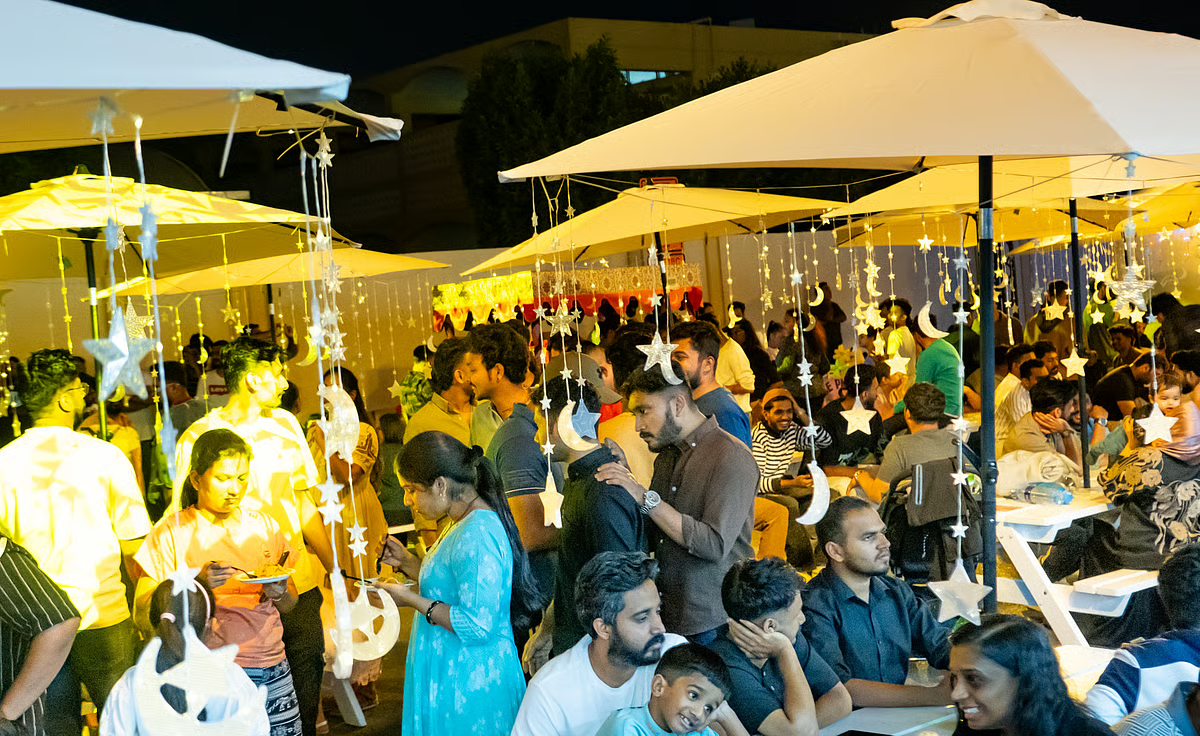
While Dubai is synonymous with luxury, its true culinary soul resides in working-class neighborhoods like Karama and Sheikh Hamdan Colony (also called Al Satwa). Here, South Asian, Filipino, Egyptian, and Levantine expats create a melting pot that redefines “global iftar.” Karama’s Plant Street and Sheikh Hamdan’s restaurants offer authentic home-cooking at fraction-of-Marina prices.
Historical Context
These neighborhoods emerged in the 1970s-80s as Dubai’s migrant workforce grew. Unlike the glitzy downtown, Karama retained a village-like feel—low-rise buildings, sidewalk eateries, laundry hanging from balconies. During Ramadan, this becomes Dubai’s most democratic space, where Emirati families mingle with Pakistani laborers, breaking fast over shared platters.
Must-Try Dishes for 2026
Dubai’s Multicultural Iftar Spread:
- Mandi & Majboos at Aroos Damascus: Yemeni/Emirati rice dishes with slow-roasted lamb, fragrant with spices
- Pakistani/Indian Buffets at Ravi Restaurant (open since 1978): All-you-can-eat curries, biryanis, rotis—legendary value
- Egyptian Koshari & Fiteer from Cairo Restaurant: Bringing Nile flavors to the Gulf
- Filipino Halo-Halo at Pamilya Restaurant: A dessert soup of shaved ice, evaporated milk, sweet beans, and jellies—surprisingly popular post-iftar
- Fresh Juices (watermelon, orange, sugarcane): Essential for Dubai’s heat
- Luqaimat: Emirati sweet dumplings drizzled with date syrup, a local tradition
2026 Updates & Practical Tips
What’s New: Dubai’s “Ramadan in Heritage Districts” campaign promotes Karama and Al Fahidi neighborhoods over tourist traps. New metro links (Route 2020 extension) improve access. Several restaurants now offer healthy iftar recipes from street vendors, catering to wellness-conscious diners.
Visitor Advice:
- Temperature check: Dubai in late Feb/early March averages 25-30°C (77-86°F)—pleasant evenings
- Budget: AED 30-70 ($8-19) for generous meals; Ravi’s buffet is ~AED 35
- Metro: Take the Red Line to ADCB or Karama stations
- Cultural sensitivity: Dubai is liberal, but avoid public eating/drinking before iftar
- Eid sale street food experiences: Last ten days coincide with pre-Eid shopping; combine food hopping with bargain hunting in Karama’s markets
Sustainability angle: Bring reusable bags—Dubai has banned single-use plastics in many areas.
6. Kuala Lumpur’s Jalan Alor & Ramadan Bazaars, Malaysia: Southeast Asia’s Halal Food Heaven

The Setting
Kuala Lumpur blends Malay, Chinese, and Indian influences into a cuisine that’s uniquely Malaysian. While Jalan Alor is famous year-round for its neon-lit food stalls, Ramadan transforms neighborhoods like Kampung Baru and TTDI into sprawling pasar Ramadan (bazaars), where temporary stalls sell everything from ayam percik to rainbow-layered kuih.
Historical Context
Malaysia’s Islamic heritage dates to the 15th century, when the Malacca Sultanate adopted Islam. Malay cuisine absorbed influences from Arab traders, Indian migrants, and Chinese settlers, creating dishes like rendang (World’s Best Dish, CNN 2011) and nasi lemak. Ramadan bazaars emerged in the 1980s, evolving from small community efforts to massive commercial events.
Must-Try Dishes for 2026
KL’s Ramadan Specialties:
- Nasi Ayam Berempah: Spiced roast chicken with turmeric rice, a bazaar staple
- Rendang (beef or chicken): Slow-cooked in coconut milk and spices until dry—intensely flavorful
- Sate (Satay): Grilled meat skewers with peanut sauce, a must at Jalan Alor
- Bubur Lambuk: Savory rice porridge with meat and vegetables, often distributed free by mosques
- Air Bandung: Rose-flavored milk drink, a Malaysian iftar classic
- Kuih-muih (traditional cakes): Ondeh-ondeh (pandan coconut balls), kuih lapis (layered cake), seri muka (pandan custard)
2026 Updates & Practical Tips
What’s New: Kuala Lumpur’s city council reports 200+ registered Ramadan bazaars for 2026, including new locations in Mont Kiara and Publika. The “KL Ramadan Trail” mobile app now features augmented reality guides.
Visitor Advice:
- Best bazaars: Taman Tun Dr Ismail (TTDI) for scale, Kampung Baru for authenticity, Bangsar for variety
- Budget: MYR 20-40 ($4-9) buys a feast; bazaars are cheaper than restaurants
- Timing: Bazaars open around 3:00-4:00 PM, peak 5:30-7:00 PM; arrive early to avoid queues
- Use the MRT/LRT; parking is nightmarish
- Health-conscious tip: Look for stalls labeled “Jom Sihat” (Let’s Be Healthy)—part of Malaysia’s healthy iftar recipes initiative
Cultural practice: Malaysians often buy excess and donate to mosques for distribution—consider participating.
7. Singapore’s Geylang Serai, Singapore: The Lion City’s Malay Heartland

The Setting
In hyper-modern Singapore, Geylang Serai stands as the Malay-Muslim cultural enclave. During Ramadan, this neighborhood—centered on Geylang Serai Market—transforms into a dazzling Ramadan Bazaar, with over 800 stalls selling food, textiles, and festive decorations. The meticulously organized chaos (very Singaporean) offers Southeast Asia’s cleanest, safest iftar experience.
Historical Context
Geylang Serai has been Singapore’s Malay quarter since the 19th century, when Javanese and Boyanese migrants settled there. Despite gentrification pressures, it retains a kampung (village) spirit, with the annual Ramadan Bazaar (since 1996) becoming a citywide attraction drawing Chinese, Indian, and Western Singaporeans alongside the Malay community.
Must-Try Dishes for 2026
Singapore-Malay Iftar Delights:
- Ayam Penyet: Indonesian-style smashed fried chicken with sambal, hugely popular
- Mee Rebus: Yellow noodles in a sweet-spicy potato-based gravy, topped with boiled egg and fritters
- Ondeh-Ondeh & Kueh Salat: Pandan desserts, Singapore’s Malay sweet tradition
- Satay Bee Hoon: Rice noodles in satay sauce with cuttlefish and vegetables—a uniquely Singaporean invention
- Teh Tarik & Milo Dinosaur: “Pulled tea” and chocolate malt drinks, essential refreshments
- Ramly Burger: Malaysian-style burger with egg wrap, a bazaar favorite
2026 Updates & Practical Tips
What’s New: Singapore’s 2026 bazaar features a “Heritage Food Lane” showcasing recipes from the 1960s-70s. Cashless payments (PayNow, credit cards) are now mandatory—Singapore’s push toward a digital economy.
Visitor Advice:
- Crowd management: Weekends (especially final ten days) draw 100,000+ visitors; visit Mon-Thu 5:00-6:00 PM
- Budget: SGD 15-30 ($11-22) for a filling meal (Singapore is pricier than regional neighbors)
- Take the MRT: Paya Lebar or Eunos stations, then bus 40/135
- Hygiene standards: Singapore enforces strict food safety; all stalls are licensed and inspected
- Sustainable choice: Stalls charge SGD 0.20 for plastic bags; bring your own
Pro tip: The nearby Malay Heritage Centre offers cultural context pre-iftar.
8. Hyderabad’s Charminar & Tolichowki, India: The Nizami Culinary Legacy

The Setting
Hyderabad, India’s “City of Pearls,” owes its gastronomic fame to 200+ years of Nizam rule. The Charminar—a 1591 monument and symbol of the city—anchors the Old City, where narrow lanes like Madina Circle and Ghansi Bazaar become iftar central. Meanwhile, Tolichowki in western Hyderabad offers a more modern, cleaner dining experience with similar authentic flavors.
Historical Context
The Nizams of Hyderabad (1724-1948) created a syncretic Indo-Islamic culture, and their royal kitchens developed Hyderabadi cuisine—a blend of Mughal, Telugu, and Marathwada influences. Ramadan was particularly significant, with the Nizams hosting elaborate iftars for 10,000+ subjects. That legacy persists in family recipes passed down through generations.
Must-Try Dishes for 2026
Hyderabadi Iftar Essentials:
- Hyderabadi Biryani at Shadab or Paradise: The city’s claim to fame—fragrant basmati rice layered with spiced meat, cooked dum-style (sealed pot)
- Haleem from Pista House or Shah Ghouse: Hyderabad’s haleem won a Geographical Indication tag; this version is richer, smoother than Pakistan’s
- Lukhmi: Pastry squares stuffed with spiced minced meat, a Ramadan special
- Sheer Khurma: Vermicelli pudding with milk, dates, nuts—an Eid dessert served throughout Ramadan
- Irani Chai & Osmania Biscuits at Nimrah Café (facing Charminar): Sweet milky tea with salty-sweet cookies, a Hyderabad ritual
- Qubani ka Meetha: Stewed apricots with cream, a Nizami dessert
2026 Updates & Practical Tips
What’s New: Hyderabad’s “Ramadan Heritage Circuit” now includes audio guides (Telugu, Urdu, English) explaining the history behind iconic eateries. Tolichowki has added several air-conditioned family-friendly restaurants.
Visitor Advice:
- Logistics: Charminar area is walkable but chaotic; Tolichowki is more organized with better parking
- Budget: ₹400-800 ($5-10) for a full meal; haleem costs ~₹200 per serving
- Best timing: Arrive 6:00 PM (iftar ~6:30 PM in late Feb); the Charminar is beautifully lit post-sunset
- Safety: Old City can be crowded; stay aware of belongings; women should consider group visits
- Sustainable tip: Support eateries using biodegradable plates (look for “green” labels)
Dialect note: Basic Urdu phrases (“Shukria” = thank you) are appreciated in Old City.
9. Jakarta’s Ramadan Night Markets, Indonesia: The World’s Largest Muslim Nation Celebrates

The Setting
Indonesia—home to 230+ million Muslims, the world’s largest Muslim-majority country—approaches Ramadan with unparalleled enthusiasm. Jakarta’s pasar takjil (iftar markets) in areas like Bendungan Hilir, Kebon Sirih, and Pecenongan become nightly festivals, offering Indonesian archipelago flavors from Sumatra to Papua.
Historical Context
Islam reached Indonesia via Arab and Indian traders in the 13th century, blending with indigenous Javanese, Sundanese, and Malay cultures. Indonesian cuisine reflects this diversity—rendang from Minangkabau, soto from Central Java, gado-gado from Jakarta. Ramadan markets emerged as community fundraisers, evolving into massive commercial-cultural events.
Must-Try Dishes for 2026
Jakarta’s Takjil Treasures:
- Kolak: Sweet soup of bananas, sweet potato, and jackfruit in palm sugar and coconut milk—the essential takjil (pre-iftar snack)
- Bakso & Soto Ayam: Meatball soup and chicken soup, Indonesian comfort foods
- Nasi Uduk: Coconut rice with fried chicken, tofu, tempeh, and sambal—Jakarta’s breakfast/iftar staple
- Es Campur: Shaved ice dessert with grass jelly, avocado, jackfruit, condensed milk
- Ketupat: Diamond-shaped rice cakes wrapped in palm leaves, essential for Eid
- Opor Ayam: Chicken in coconut curry, typically an Eid dish but available late Ramadan
2026 Updates & Practical Tips
What’s New: Jakarta’s “Ramadan Digital Map” (powered by Grab and Gojek) shows real-time market crowds and trending stalls. The government reports a 35% post-pandemic recovery in market attendance.
Visitor Advice:
- Crowd strategy: Markets open 3:00 PM; arrive by 4:30 PM to beat the 5:30 PM rush
- Budget: IDR 50,000-100,000 ($3-7) feeds you well; Jakarta is affordable
- Transportation: Use ride-hailing apps (Grab, Gojek); traffic is horrific
- Language: English is limited; download Google Translate’s Indonesian pack
- Halal assurance: 99% of food is halal; Indonesia is the top destination for halal food travel globally
Cultural insight: Indonesians break fast with sweet kolak/es, then pray Maghrib, then the main meal—pace yourself.
10. Amman’s Rainbow Street, Jordan: Ancient History Meets Modern Iftar

The Setting
Amman, one of the world’s oldest continuously inhabited cities, balances ancient Roman ruins with a thriving modern café culture. Rainbow Street in Jabal Amman connects old and new, with traditional kunafa shops next to hipster coffee roasters. During Ramadan, the street becomes a pedestrian promenade of iftar delights.
Historical Context
Jordan’s culinary traditions draw from Bedouin heritage, Palestinian influence (post-1948), and Levantine Arab culture. Ramadan here emphasizes communal dining—mansaf (the national dish) is traditionally shared from a large platter. Rainbow Street, once a quiet residential area, gentrified in the 2000s but retained family-run eateries serving recipes from Ottoman times.
Must-Try Dishes for 2026
Jordanian Iftar Highlights:
- Mansaf: Lamb cooked in fermented dried yogurt (jameed), served over rice and thin bread, garnished with almonds—Jordan’s soul food
- Falafel & Hummus from Hashem Restaurant (since 1952): Amman’s most famous cheap eat, beloved by King Abdullah II
- Kunafa at Habibah Sweets: Shredded phyllo with sweet cheese, drenched in syrup, served warm
- Makloubeh: “Upside-down” rice dish with eggplant and chicken, flipped onto a platter
- Fattoush & Tabbouleh: Fresh salads with sumac and pomegranate, essential starters
- Ayran or Jallab: Yogurt drink or date/grape syrup beverage
2026 Updates & Practical Tips
What’s New: Amman’s Greater Municipality has designated Rainbow Street as a “Ramadan Heritage Zone,” with live oud music and storytelling evenings. A new “Iftar & Heritage” walking tour (bookable via Trip.com) combines food with visits to Roman amphitheater and Citadel.
Visitor Advice:
- Budget: JOD 10-25 ($14-35) for meals; Jordan is mid-priced
- Iftar timing: Around 6:00 PM (late Feb) to 6:40 PM (mid-March)
- Dress code: Modest attire appreciated; Amman is cosmopolitan but respectful
- Transportation: Taxis are cheap; download Uber or Careem
- Safety: Amman is one of the Middle East’s safest cities; solo female travelers report comfort
- Sustainable travel: Several restaurants now use solar power—look for “Green Jordan” stickers
Cultural etiquette: Jordanians are exceptionally hospitable; if invited to share iftar, accept—it’s an honor.
Conclusion: The Universal Language of Breaking Bread
These ten food streets—from the spice-scented alleys of Old Delhi to the cosmopolitan buzz of Dubai, from Jakarta’s communal takjil markets to Amman’s heritage lanes—represent more than just top Ramadan food destinations. They are living archives of cultural memory, economic engines for local communities, and profound examples of how food builds bridges across differences.
As Ramadan 2026 unfolds during the Northern Hemisphere’s late winter, the shorter fasting hours may invite more travelers to experience these culinary pilgrimages. Our internal research suggests that iftar tourism—when done respectfully and sustainably—generates 30-40% of annual revenue for many street vendors, supporting families and preserving culinary traditions that might otherwise succumb to globalization’s homogenizing force.
Yet beyond economics lies a deeper truth: the act of breaking fast together—whether you’re a devout Muslim, a curious traveler, or a food enthusiast—taps into something universally human. As the Smithsonian notes, “shared meals are humanity’s oldest social technology,” and Ramadan amplifies this ancient practice nightly for thirty days.
Call to Action: Travel Mindfully, Eat Consciously
As you plan your iftar food street experiences for Ramadan 2026, consider these sustainable travel principles:
- Support Local, Eat Local: Choose family-run stalls over chains; your dollars directly feed communities
- Reduce Waste: Bring reusable utensils, water bottles, and shopping bags
- Respect the Sacred: Avoid eating/drinking publicly before iftar; dress modestly; ask before photographing
- Learn the Language: Even basic greetings (“Ramadan Mubarak,” “Shukran,” “Terima kasih”) earn goodwill
- Share Wisely on Social Media: Tell authentic stories, credit local businesses, avoid poverty tourism tropes
The beauty of these food streets is their resilience—they’ve survived pandemics, economic downturns, and urban development pressures because they serve a need deeper than hunger. They feed the soul.
So whether you’re biting into a butter-dripping nihari in Delhi, savoring kunafa in Amman, or sharing a platter of mansaf with Jordanian strangers, remember: you’re not just a tourist consuming an experience. You’re a participant in a 1,400-year-old tradition of breaking bread together, a temporary member of a global ummah (community) that, for one month each year, resets its moral compass through discipline, charity, and shared meals.
Plan your journey. Pack your respect. And prepare to be fed—body, mind, and spirit.
For more premium travel insights and global food culture analysis, follow our coverage on sustainable tourism, culinary heritage, and authentic cultural experiences.